The Fisherman and the Little Fish 渔夫和小鱼 (精美插图) 双语 拼音注音 伊索寓言
标签:伊索寓言 儿童故事集 中英对照翻译 双语故事 拼音注音
Last Update 最后更新: 2022-01-12
The Fisherman and the Little Fish (English)
Total Words: 108
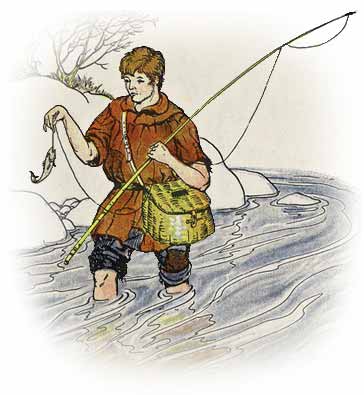
A poor Fisherman, who lived on the fish he caught, had bad luck one day and caught nothing but a very small fry. The Fisherman was about to put it in his basket when the little Fish said:
"Please spare me, Mr. Fisherman! I am so small it is not worth while to carry me home. When I am bigger, I shall make you a much better meal."
But the Fisherman quickly put the fish into his basket.
"How foolish I should be," he said, "to throw you back. However small you may be, you are better than nothing at all."
Moral: A small gain is worth more than a large promise.
渔夫和小鱼 (中文翻译 拼音注音)
有一个渔夫,靠打渔为生。一天,他只打上来一条小鱼。渔夫正要把他放到他的鱼篓里,小鱼大声叫到:
“请将我放回水里吧!我太小了,不值得抓回家,等我会变大点时候,再来抓我,可以做一顿更丰盛的饭!”
但是渔夫迅速的把鱼放进了鱼篓里。
渔夫说:“我得多愚蠢啊,把你扔回大海。尽管你很小,总比什么都没有的强”


About 关于
The Aesop Fables for Children 伊索寓言儿童故事全集 (图文英汉双语版) (this work), the english fables originally from The Aesop for Children: with Pictures by Milo Winter published by Rand, McNally & Co in 1919. Some of pictures come from Library of Congress. This work is considered to be in the public domain in the United States. The Aesop Fables for Children contains the text of selected fables, color pictures, video, and interactive animations, and will be enjoyed by readers of any age.
The Aesop Fables for Children are a collection of stories designed to teach moral lessons credited to Aesop, a Greek slave and story-teller thought to have lived between 620 and 560 BCE.
Aesop's fables are some of the most well known in the world and have been translated in multiple languages and become popular in dozens of cultures through the course of five centuries. They have been told and retold in a variety of media, from oral tradition to written storybooks to stage, film and animated cartoon versions—even in architecture. This page include translation to Simplified Chinese.
伊索寓言是一部世界上最早的寓言故事集,是世界文学史上流传最广的寓言故事之一。 本文包含伊索寓言故事英文原文和简体中文翻译(中英双语)。
