The Young Crab and His Mother 小螃蟹和妈妈 (精美插图) 双语 拼音注音 伊索寓言
标签:伊索寓言 儿童故事集 中英对照翻译 双语故事 拼音注音
Last Update 最后更新: 2022-01-12
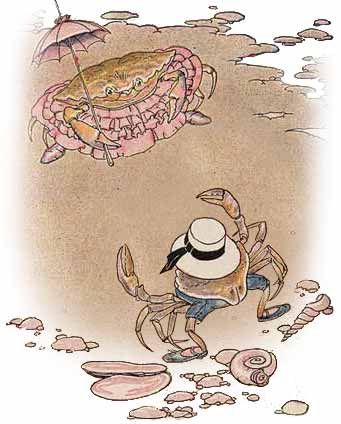
The Young Crab and His Mother (English)
Total Words: 92
"Why in the world do you walk sideways like that?" said a Mother Crab to her son. "You should always walk straight forward with your toes turned out."
"Show me how to walk, mother dear," answered the little Crab obediently, "I want to learn."
So the old Crab tried and tried to walk straight forward. But she could walk sideways only, like her son. And when she wanted to turn her toes out she tripped and fell on her nose.
Moral: Do not tell others how to act unless you can set a good example.
小螃蟹和妈妈 (中文翻译 拼音注音)
“你为什么要这样横着走路啊?” 蟹妈妈问小小螃蟹。“你应该直着走,脚趾朝外。”
“那亲爱的妈妈,您来示范一下应该怎么走吧,” 小螃蟹顺从地回答道,“我想学。”
于是蟹妈妈很努力地试着直直地走,但是她无论如何只能够横着走,就像她儿子那样。当她想要将脚趾往外弯的时候,她就脸朝下地被绊倒在地上。


Relevant Fables 相关寓言故事
About 关于
The Aesop Fables for Children 伊索寓言儿童故事全集 (图文英汉双语版) (this work), the english fables originally from The Aesop for Children: with Pictures by Milo Winter published by Rand, McNally & Co in 1919. Some of pictures come from Library of Congress. This work is considered to be in the public domain in the United States. The Aesop Fables for Children contains the text of selected fables, color pictures, video, and interactive animations, and will be enjoyed by readers of any age.
The Aesop Fables for Children are a collection of stories designed to teach moral lessons credited to Aesop, a Greek slave and story-teller thought to have lived between 620 and 560 BCE.
Aesop's fables are some of the most well known in the world and have been translated in multiple languages and become popular in dozens of cultures through the course of five centuries. They have been told and retold in a variety of media, from oral tradition to written storybooks to stage, film and animated cartoon versions—even in architecture. This page include translation to Simplified Chinese.
伊索寓言是一部世界上最早的寓言故事集,是世界文学史上流传最广的寓言故事之一。 本文包含伊索寓言故事英文原文和简体中文翻译(中英双语)。
