The Miser 守财奴 (精美插图) 双语 拼音注音 伊索寓言
标签:伊索寓言 儿童故事集 中英对照翻译 双语故事 拼音注音
Last Update 最后更新: 2022-01-12
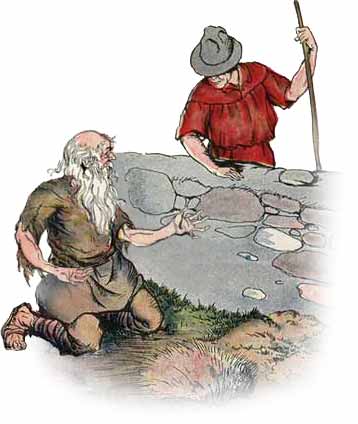
The Miser (English)
Total Words: 210
A Miser had buried his gold in a secret place in his garden. Every day he went to the spot, dug up the treasure and counted it piece by piece to make sure it was all there. He made so many trips that a Thief, who had been observing him, guessed what it was the Miser had hidden, and one night quietly dug up the treasure and made off with it.
When the Miser discovered his loss, he was overcome with grief and despair. He groaned and cried and tore his hair.
A passerby heard his cries and asked what had happened.
"My gold! O my gold!" cried the Miser, wildly, "someone has robbed me!"
"Your gold! There in that hole? Why did you put it there? Why did you not keep it in the house where you could easily get it when you had to buy things?"
"Buy!" screamed the Miser angrily. "Why, I never touched the gold. I couldn't think of spending any of it."
The stranger picked up a large stone and threw it into the hole.
"If that is the case," he said, "cover up that stone. It is worth just as much to you as the treasure you lost!"
Moral: A possession is worth no more than the use we make of it.
守财奴 (中文翻译 拼音注音)
一个守财奴把他的金子悄悄地埋在了自己的花园里。 每天,他都会去把那些财宝挖出来,一个一个地数啊数,好确保一个子儿都不少。 如此来来回回的神秘举动,吸引了一个盗贼的关注,并猜出了那个守财奴藏的是什么,某一天深夜,这个盗贼就跑去悄悄地挖出并偷走了这些宝贝。
等到这个守财奴发现财宝都丢失的时候,他的心里充满了悔恨和绝望。一边呻吟,一边痛哭,还一边扯着自己的头发。
一个过路人听到了他的哭声,就问起发生了什么。
“我的金子啊!老天爷!我的金子啊!”守财奴发疯了一样的哭喊道,“我被人抢劫了!”
“你的金子!是在那个坑里吗?你为什么会放在那里?你怎么不放在你屋里呢?那样的话,你想买东西的时候,就很容易拿出来了啊?”
“买?”守财奴生气地吼叫道。“噢,我从未碰过这些金子。我根本不愿意用它们去买什么东西。”
那个陌生人捡起一块很大的石头,并扔进了守财奴挖的坑里。
“这样的话,”他建议到,“把那石头埋起来吧。对你来说,它就跟你那些失窃的财宝一样值钱。”


About 关于
The Aesop Fables for Children 伊索寓言儿童故事全集 (图文英汉双语版) (this work), the english fables originally from The Aesop for Children: with Pictures by Milo Winter published by Rand, McNally & Co in 1919. Some of pictures come from Library of Congress. This work is considered to be in the public domain in the United States. The Aesop Fables for Children contains the text of selected fables, color pictures, video, and interactive animations, and will be enjoyed by readers of any age.
The Aesop Fables for Children are a collection of stories designed to teach moral lessons credited to Aesop, a Greek slave and story-teller thought to have lived between 620 and 560 BCE.
Aesop's fables are some of the most well known in the world and have been translated in multiple languages and become popular in dozens of cultures through the course of five centuries. They have been told and retold in a variety of media, from oral tradition to written storybooks to stage, film and animated cartoon versions—even in architecture. This page include translation to Simplified Chinese.
伊索寓言是一部世界上最早的寓言故事集,是世界文学史上流传最广的寓言故事之一。 本文包含伊索寓言故事英文原文和简体中文翻译(中英双语)。
