The Lark and Her Young Ones 百灵鸟和它的孩子们 (精美插图) 双语 拼音注音 伊索寓言
标签:伊索寓言 儿童故事集 中英对照翻译 双语故事 拼音注音
Last Update 最后更新: 2022-01-12
The Lark and Her Young Ones (English)
Total Words: 296
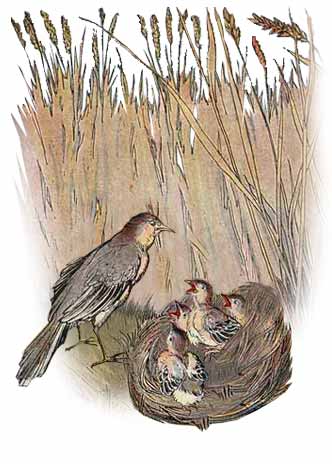
A Lark made her nest in a field of young wheat. As the days passed, the wheat stalks grew tall and the young birds, too, grew in strength. Then one day, when the ripe golden grain waved in the breeze, the Farmer and his son came into the field.
"This wheat is now ready for reaping," said the Farmer. "We must call in our neighbors and friends to help us harvest it."
The young Larks in their nest close by were much frightened, for they knew they would be in great danger if they did not leave the nest before the reapers came. When the Mother Lark returned with food for them, they told her what they had heard.
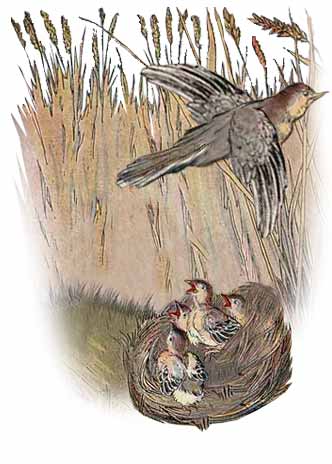
"Do not be frightened, children," said the Mother Lark. "If the Farmer said he would call in his neighbors and friends to help him do his work, this -wheat will not be reaped for a while yet."
A few days later, the wheat was so ripe, that when the wind shook the stalks, a hail of wheat grains came rustling down on the young Larks' heads.
"If this wheat is not harvested at once," said the Farmer, "we shall lose half the crop. We cannot wait any longer for help from our friends. Tomorrow we must set to work, ourselves."
When the young Larks told their mother what they had heard that day, she said:
"Then we must be off at once. When a man decides to do his own work and not depend on any one else, then you may be sure there will be no more delay."
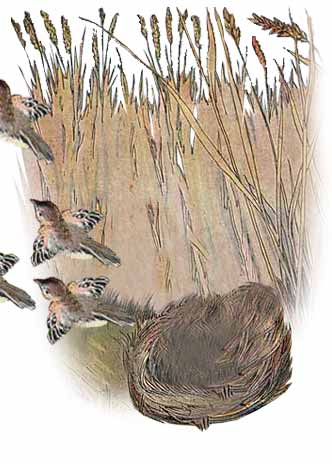
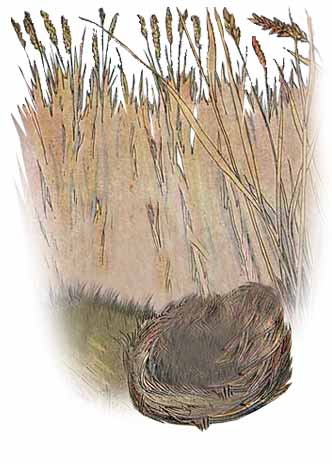
There was much fluttering and trying out of wings that afternoon, and at sunrise next day, when the Farmer and his son cut down the grain, they found an empty nest.
Moral: Self-help is the best help.
百灵鸟和它的孩子们 (中文翻译 拼音注音)
有一只百灵鸟把家安在一片青嫩青嫩的麦田里。星移斗转、日月变换,麦秆是一天高过一天,它的孩子们也长得越来越结实。后来有一天,麦子熟了,沉甸甸的金黄麦穗在清风中自在的摇曳,农夫和他的儿子走进了这块麦田。
“这些麦子可以准备收割了” 农夫说,“我们得叫上邻居和朋友些来帮我们忙。”
在窝里得小百灵鸟们对此感到害怕极了,因为它们若不赶紧在收割者们到来之前离开,那将会对自己非常危险。当它们的妈妈带着食物回来的时候,它们说出了自己听闻到的事情。
“莫怕莫怕,我亲爱的孩子们” 百灵鸟妈妈说。“如果农夫说他要叫上他的邻居和朋友来帮忙,那就意味着这片麦田暂时还不会被收割。”
过了几天,这些麦子已经熟透了,当微风拂过麦田,好一些麦粒簌簌地落在小百灵鸟的头上。
“如果不立马收割掉这些麦子” 农夫说,“我们会损失一半的收成。我们不能再等邻居朋友些来帮忙了。明天我们就自己开始收割。”
那天小百灵鸟们再次将这些事情告诉了自己的妈妈,它们妈妈就说:
“这样的话,我们也必须离开了。当一个人决定去做自己的事情而不依赖任何人,那你就可以确信不会再有任何耽搁了。”
那天下午,小百灵鸟们不停地拍打着翅膀练习飞翔,第二天日出的时候,农夫和他的儿子收割掉麦子后,发现了一个空空的鸟窝。


Relevant Fables 相关寓言故事
About 关于
The Aesop Fables for Children 伊索寓言儿童故事全集 (图文英汉双语版) (this work), the english fables originally from The Aesop for Children: with Pictures by Milo Winter published by Rand, McNally & Co in 1919. Some of pictures come from Library of Congress. This work is considered to be in the public domain in the United States. The Aesop Fables for Children contains the text of selected fables, color pictures, video, and interactive animations, and will be enjoyed by readers of any age.
The Aesop Fables for Children are a collection of stories designed to teach moral lessons credited to Aesop, a Greek slave and story-teller thought to have lived between 620 and 560 BCE.
Aesop's fables are some of the most well known in the world and have been translated in multiple languages and become popular in dozens of cultures through the course of five centuries. They have been told and retold in a variety of media, from oral tradition to written storybooks to stage, film and animated cartoon versions—even in architecture. This page include translation to Simplified Chinese.
伊索寓言是一部世界上最早的寓言故事集,是世界文学史上流传最广的寓言故事之一。 本文包含伊索寓言故事英文原文和简体中文翻译(中英双语)。
