The Peacock 孔雀 (精美插图) 双语 拼音注音 伊索寓言
标签:伊索寓言 儿童故事集 中英对照翻译 双语故事 拼音注音
Last Update 最后更新: 2022-01-12
The Peacock (English)
Total Words: 181
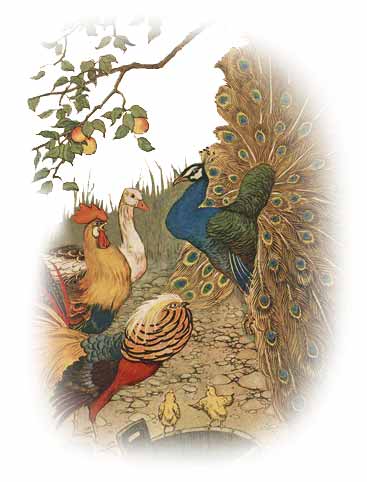
The Peacock, they say, did not at first have the beautiful feathers in which he now takes so much pride. These, Juno, whose favorite he was, granted to him one day when he begged her for a train of feathers to distinguish him from the other birds. Then, decked in his finery, gleaming with emerald, gold, purple, and azure, he strutted proudly among the birds. All regarded him with envy. Even the most beautiful pheasant could see that his beauty was surpassed.
Presently the Peacock saw an Eagle soaring high up in the blue sky and felt a desire to fly, as he had been accustomed to do. Lifting his wings he tried to rise from the ground. But the weight of his magnificent train held him down. Instead of flying up to greet the first rays of the morning sun or to bathe in the rosy light among the floating clouds at sunset, he would have to walk the ground more encumbered and oppressed than any common barnyard fowl.
Moral: Do not sacrifice your freedom for the sake of pomp and show.
孔雀 (中文翻译 拼音注音)
人们说,最开始孔雀并没有他现在自傲的美丽羽毛。那是后来孔雀请求宠爱他的的朱诺神赐给他的,因为他希望有一身可以让他从其鸟中脱颖而出的羽毛。而后,他穿 上这身闪耀着翠绿,金黄,亮紫和碧蓝光芒的盛装,骄傲地在其他鸟面前昂首阔步。所有的鸟都嫉妒极了。就连最漂亮的山鸡在孔雀面前都觉得黯然失色。
不久,孔雀看见一只老鹰在蓝空中翱翔,于是他又怀念起以前自己自由飞翔的日子。于是他抬起自己的翅膀,尝试着飞离地面。但是他那些华丽的羽毛太重了,他飞不 起来了。这下子,他不仅没法飞在早晨的第一缕曙光里,或沐浴在日落时玫瑰色的云彩间,而且还必须得带着一身重担,郁郁寡欢地走在地上,日子过得还不如一只家禽。


Relevant Fables 相关寓言故事
About 关于
The Aesop Fables for Children 伊索寓言儿童故事全集 (图文英汉双语版) (this work), the english fables originally from The Aesop for Children: with Pictures by Milo Winter published by Rand, McNally & Co in 1919. Some of pictures come from Library of Congress. This work is considered to be in the public domain in the United States. The Aesop Fables for Children contains the text of selected fables, color pictures, video, and interactive animations, and will be enjoyed by readers of any age.
The Aesop Fables for Children are a collection of stories designed to teach moral lessons credited to Aesop, a Greek slave and story-teller thought to have lived between 620 and 560 BCE.
Aesop's fables are some of the most well known in the world and have been translated in multiple languages and become popular in dozens of cultures through the course of five centuries. They have been told and retold in a variety of media, from oral tradition to written storybooks to stage, film and animated cartoon versions—even in architecture. This page include translation to Simplified Chinese.
伊索寓言是一部世界上最早的寓言故事集,是世界文学史上流传最广的寓言故事之一。 本文包含伊索寓言故事英文原文和简体中文翻译(中英双语)。
