The Flies and the Honey 苍蝇和蜂蜜 (精美插图) 双语 拼音注音 伊索寓言
标签:伊索寓言 儿童故事集 中英对照翻译 双语故事 拼音注音
Last Update 最后更新: 2022-01-12
The Flies and the Honey (English)
Total Words: 102
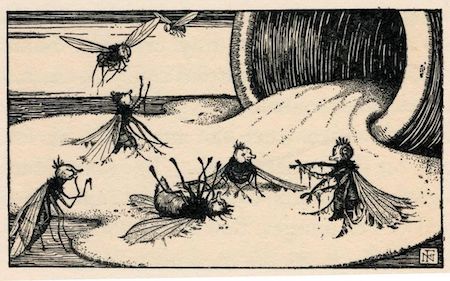
A jar of honey was upset and the sticky sweetness flowed out on the table. The sweet smell of the honey soon brought a large number of Flies buzzing around. They did not wait for an invitation. No, indeed; they settled right down, feet and all, to gorge themselves. The Flies were quickly smeared from head to foot with honey. Their wings stuck together. They could not pull their feet out of the sticky mass. And so they died, giving their lives for the sake of a taste of sweetness.
Moral: Be not greedy for a little passing pleasure. It may destroy you.
苍蝇和蜂蜜 (中文翻译 拼音注音)
一罐蜂蜜被打翻了,黏乎乎的蜜糖流到了桌子上。 蜂蜜那香甜的气味吸引来了一大群苍蝇。 它们没有等着谁来发出邀请函。 是的,它们径直落在蜂蜜上,手脚并用,贪婪地吃啊吃。 很快,苍蝇们从头到脚都粘上了蜂蜜。 连它们翅膀都粘在了一起。 现在它们根本无法从黏黏的蜂蜜中脱身。 它们就这样死了,为了品尝香甜的蜂蜜而丢掉了自己的小命。


About 关于
The Aesop Fables for Children 伊索寓言儿童故事全集 (图文英汉双语版) (this work), the english fables originally from The Aesop for Children: with Pictures by Milo Winter published by Rand, McNally & Co in 1919. Some of pictures come from Library of Congress. This work is considered to be in the public domain in the United States. The Aesop Fables for Children contains the text of selected fables, color pictures, video, and interactive animations, and will be enjoyed by readers of any age.
The Aesop Fables for Children are a collection of stories designed to teach moral lessons credited to Aesop, a Greek slave and story-teller thought to have lived between 620 and 560 BCE.
Aesop's fables are some of the most well known in the world and have been translated in multiple languages and become popular in dozens of cultures through the course of five centuries. They have been told and retold in a variety of media, from oral tradition to written storybooks to stage, film and animated cartoon versions—even in architecture. This page include translation to Simplified Chinese.
伊索寓言是一部世界上最早的寓言故事集,是世界文学史上流传最广的寓言故事之一。 本文包含伊索寓言故事英文原文和简体中文翻译(中英双语)。
