The Old Lion and the Fox 年迈的狮子和狐狸 (精美插图) 双语 拼音注音 伊索寓言
标签:伊索寓言 儿童故事集 中英对照翻译 双语故事 拼音注音
Last Update 最后更新: 2022-01-12
The Old Lion and the Fox (English)
Total Words: 174
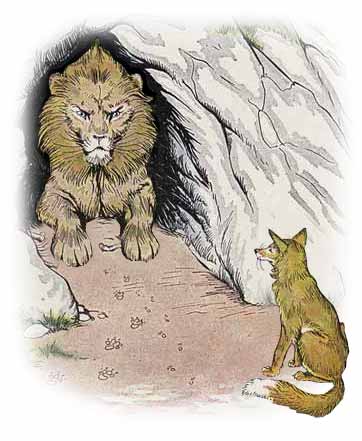
An old Lion, whose teeth and claws were so worn that it was not so easy for him to get food as in his younger days, pretended that he was sick. He took care to let all his neighbors know about it, and then lay down in his cave to wait for visitors. And when they came to offer him their sympathy, he ate them up one by one.
The Fox came too, but he was very cautious about it. Standing at a safe distance from the cave, he inquired politely after the Lion's health. The Lion replied that he was very ill indeed, and asked the Fox to step in for a moment. But Master Fox very wisely stayed outside, thanking the Lion very kindly for the invitation.
"I should be glad to do as you ask," he added, "but I have noticed that there are many footprints leading into your cave and none coming out. Pray tell me, how do your visitors find their way out again?"
Moral: Take warning from the misfortunes of others.
年迈的狮子和狐狸 (中文翻译 拼音注音)
有一头年迈的狮子,他的牙齿和爪子都被磨平了,这对他而言,想要像年轻时候那样捕获猎物,已经非常不容易了。 他假装生病了,让他所有的邻居都知道他生病的事情,接着就躺在自己的洞穴里等待着访客。 当那些邻居前来慰问表示同情的时候,他把邻居们一个一个都吃掉了。
狐狸也来慰问了,不过他非常小心。远远地站在一个距离洞穴十分安全的位置,礼貌地询问了狮子的健康状况。 那狮子回答说,他确实病得很重了,就让狐狸走到他身边来呆一会儿。 但是,狐狸大师非常聪明地站在洞穴外面,十分友善地向狮子的邀请表示了谢意。
“我自然很高兴地按照您所吩咐地去做,”狐狸说,“不过我注意到,有很多脚印都指向您的洞穴,却没有一个往外走的。请您告诉我,他们是如何出来的呢?”


Relevant Fables 相关寓言故事
- 伊索寓言:The Fox and the Grapes 狐狸和葡萄
- 伊索寓言:The Lion and the Mouse 狮子和老鼠
- 伊索寓言:The Wild Boar and the Fox 野猪和狐狸
- 伊索寓言:The Fox and the Stork 狐狸和鹤
- 伊索寓言:The Cock and the Fox 公鸡和狐狸
- 伊索寓言:The Fox and the Goat 狐狸和山羊
- 伊索寓言:The Fox and the Leopard 狐狸和豹子
- 伊索寓言:The Fox and the Crow 狐狸和乌鸦
- 伊索寓言:The Dog the Cock and the Fox 狗、公鸡和狐狸
- 伊索寓言:The Lion and the Ass 狮子和驴
- 伊索寓言:The Lion and the Gnat 狮子和蚊子
- 伊索寓言:The Ass the Fox and the Lion 驴,狐狸和狮子
- 伊索寓言:The Lion the Bear and the Fox 狮子、熊和狐狸
- 伊索寓言:The Wolf and the Lion 狼和狮子
- 伊索寓言:The Fox and the Lion 狐狸和狮子
- 伊索寓言:The Dogs and the Fox 狗和狐狸
- 伊索寓言:Three Bullocks and a lion 三头公牛和一只狮子
- 伊索寓言:The Fox and the Crab 狐狸和螃蟹
- 伊索寓言:The Man and the Lion 人和狮子
- 伊索寓言:The Fox and the Hedgehog 狐狸与刺猬
- 伊索寓言:The Fox Without a Tail 断了尾巴的狐狸
- 伊索寓言:The Cat and the Fox 猫和狐狸
- 伊索寓言:The Old Lion 年迈的狮子
- 伊索寓言:The Fox and the Pheasants 狐狸和山鸡
- 伊索寓言:The Fox and the Monkey 狐狸和猴子
- 伊索寓言:The Shepherd and the Lion 牧羊人和狮子
About 关于
The Aesop Fables for Children 伊索寓言儿童故事全集 (图文英汉双语版) (this work), the english fables originally from The Aesop for Children: with Pictures by Milo Winter published by Rand, McNally & Co in 1919. Some of pictures come from Library of Congress. This work is considered to be in the public domain in the United States. The Aesop Fables for Children contains the text of selected fables, color pictures, video, and interactive animations, and will be enjoyed by readers of any age.
The Aesop Fables for Children are a collection of stories designed to teach moral lessons credited to Aesop, a Greek slave and story-teller thought to have lived between 620 and 560 BCE.
Aesop's fables are some of the most well known in the world and have been translated in multiple languages and become popular in dozens of cultures through the course of five centuries. They have been told and retold in a variety of media, from oral tradition to written storybooks to stage, film and animated cartoon versions—even in architecture. This page include translation to Simplified Chinese.
伊索寓言是一部世界上最早的寓言故事集,是世界文学史上流传最广的寓言故事之一。 本文包含伊索寓言故事英文原文和简体中文翻译(中英双语)。
