The Shepherd and the Lion 牧羊人和狮子 (精美插图) 双语 拼音注音 伊索寓言
标签:伊索寓言 儿童故事集 中英对照翻译 双语故事 拼音注音
Last Update 最后更新: 2022-01-12
The Shepherd and the Lion (English)
Total Words: 192
A Shepherd, counting his Sheep one day, discovered that a number of them were missing.
Much irritated, he very loudly and boastfully declared that he would catch the thief and punish him as he deserved. The Shepherd suspected a Wolf of the deed and so set out toward a rocky region among the hills, where there were caves infested by Wolves. But before starting out he made a vow to Jupiter that if he would help him find the thief he would offer a fat Calf as a sacrifice.
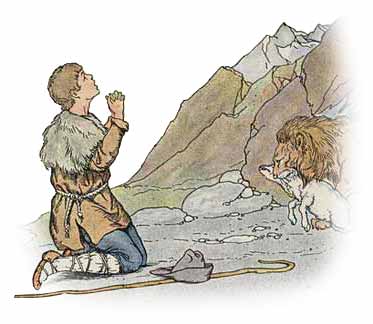
The Shepherd searched a long time without finding any Wolves, but just as he was passing near a large cave on the mountain side, a huge Lion stalked out, carrying a Sheep. In great terror the Shepherd fell on his knees.
"Alas, O Jupiter, man does not know what he asks! To find the thief I offered to sacrifice a fat Calf. Now I promise you a full-grown Bull, if you but make the thief go away!"
Moral: We are often not so eager for what we seek, after we have found it. Do not foolishly ask for things that would bring ruin if they were granted.
牧羊人和狮子 (中文翻译 拼音注音)
有一天,牧羊人正在清点羊多数量的时候发现少了一些羊。
十分恼怒的他,大声地自负的说,他一定要逮住偷羊贼,并如数惩处。 牧羊人怀疑是这是狼干的,于是就朝着一片山石交错狼群出没的丘陵地带走去。 不过,在他临行前,他向朱庇特发誓,要是朱庇特能帮忙找到偷羊贼,他愿意献上一头肥壮的小牛。
牧羊人找啊找,却没有发现任何狼的踪迹。 不过,就在他经过山那边一个很大的洞穴之时,一头巨大的狮子叼着一只羊走了出来。恐惧极了的牧羊人不由自主地瘫跪在地上。
“啊!伟大的朱庇特啊!我对自己的要求一无所知!为了找到偷羊贼,我曾发誓献上一头肥壮的小牛。现在,我发誓,要是您能让这偷羊贼(狮子)走开的话,我保证献上一头成年公牛!”


Relevant Fables 相关寓言故事
- 伊索寓言:The Lion and the Mouse 狮子和老鼠
- 伊索寓言:The Lion and the Ass 狮子和驴
- 伊索寓言:The Lion and the Gnat 狮子和蚊子
- 伊索寓言:The Ass the Fox and the Lion 驴,狐狸和狮子
- 伊索寓言:The Lion the Bear and the Fox 狮子、熊和狐狸
- 伊索寓言:The Wolf and the Lion 狼和狮子
- 伊索寓言:The Fox and the Lion 狐狸和狮子
- 伊索寓言:The Wolf and the Shepherd 狼和牧羊人
- 伊索寓言:The Goatherd and the Wild Goats 牧羊人和野山羊
- 伊索寓言:Three Bullocks and a lion 三头公牛和一只狮子
- 伊索寓言:The Old Lion and the Fox 年迈的狮子和狐狸
- 伊索寓言:The Man and the Lion 人和狮子
- 伊索寓言:The Wolf and the Shepherd 狼和牧羊人
- 伊索寓言:The Goatherd and the Goat 牧羊人和山羊
- 伊索寓言:The Old Lion 年迈的狮子
About 关于
The Aesop Fables for Children 伊索寓言儿童故事全集 (图文英汉双语版) (this work), the english fables originally from The Aesop for Children: with Pictures by Milo Winter published by Rand, McNally & Co in 1919. Some of pictures come from Library of Congress. This work is considered to be in the public domain in the United States. The Aesop Fables for Children contains the text of selected fables, color pictures, video, and interactive animations, and will be enjoyed by readers of any age.
The Aesop Fables for Children are a collection of stories designed to teach moral lessons credited to Aesop, a Greek slave and story-teller thought to have lived between 620 and 560 BCE.
Aesop's fables are some of the most well known in the world and have been translated in multiple languages and become popular in dozens of cultures through the course of five centuries. They have been told and retold in a variety of media, from oral tradition to written storybooks to stage, film and animated cartoon versions—even in architecture. This page include translation to Simplified Chinese.
伊索寓言是一部世界上最早的寓言故事集,是世界文学史上流传最广的寓言故事之一。 本文包含伊索寓言故事英文原文和简体中文翻译(中英双语)。
