The Man and the Lion 人和狮子 (精美插图) 双语 拼音注音 伊索寓言
标签:伊索寓言 儿童故事集 中英对照翻译 双语故事 拼音注音
Last Update 最后更新: 2022-01-12
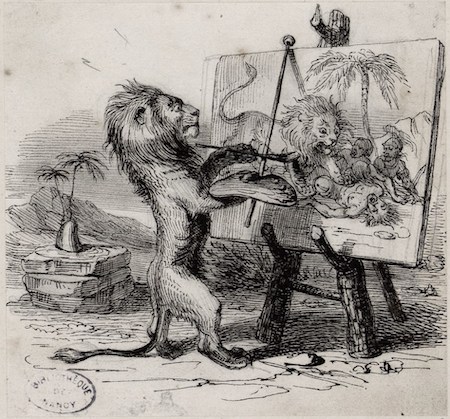
The Man and the Lion (English)
Total Words: 120
A Lion and a Man chanced to travel in company through the forest. They soon began to quarrel, for each of them boasted that he and his kind were far superior to the other both in strength and mind.
Now they reached a clearing in the forest and there stood a statue. It was a representation of Heracles in the act of tearing the jaws of the Nemean Lion.
"See," said the man, "that's how strong we are! The King of Beasts is like wax in our hands!"
"Ho!" laughed the Lion, "a Man made that statue. It would have been quite a different scene had a Lion made it!"
Moral: It all depends on the point of view, and who tells the story.
人和狮子 (中文翻译 拼音注音)
有一天,狮子与人同行经过森林,不久他们开始争吵,并互相吹嘘自己。
在路上,他们看见一块石碑,石碑上刻着一个人征服几头狮子的图画。
那人一边指给狮子看,一边说:“你看,事实证明我们比你们强得多了吧。”
狮子笑着说道:“这是人类刻的雕像,如果狮子刻的,那么你就会看见完全不同的场景。”


Relevant Fables 相关寓言故事
- 伊索寓言:The Lion and the Mouse 狮子和老鼠
- 伊索寓言:The Man and the Satyr 人和萨梯
- 伊索寓言:The Ass and His Driver 驴和赶驴人
- 伊索寓言:The Lion and the Ass 狮子和驴
- 伊索寓言:The Lion and the Gnat 狮子和蚊子
- 伊索寓言:The Leap at Rhodes 在罗兹市的一次跳跃
- 伊索寓言:The Ass the Fox and the Lion 驴,狐狸和狮子
- 伊索寓言:The Lion the Bear and the Fox 狮子、熊和狐狸
- 伊索寓言:The Wolf and the Lion 狼和狮子
- 伊索寓言:The Fox and the Lion 狐狸和狮子
- 伊索寓言:Three Bullocks and a lion 三头公牛和一只狮子
- 伊索寓言:The Old Lion and the Fox 年迈的狮子和狐狸
- 伊索寓言:The Old Lion 年迈的狮子
- 伊索寓言:The Shepherd and the Lion 牧羊人和狮子
About 关于
The Aesop Fables for Children 伊索寓言儿童故事全集 (图文英汉双语版) (this work), the english fables originally from The Aesop for Children: with Pictures by Milo Winter published by Rand, McNally & Co in 1919. Some of pictures come from Library of Congress. This work is considered to be in the public domain in the United States. The Aesop Fables for Children contains the text of selected fables, color pictures, video, and interactive animations, and will be enjoyed by readers of any age.
The Aesop Fables for Children are a collection of stories designed to teach moral lessons credited to Aesop, a Greek slave and story-teller thought to have lived between 620 and 560 BCE.
Aesop's fables are some of the most well known in the world and have been translated in multiple languages and become popular in dozens of cultures through the course of five centuries. They have been told and retold in a variety of media, from oral tradition to written storybooks to stage, film and animated cartoon versions—even in architecture. This page include translation to Simplified Chinese.
伊索寓言是一部世界上最早的寓言故事集,是世界文学史上流传最广的寓言故事之一。 本文包含伊索寓言故事英文原文和简体中文翻译(中英双语)。
