The Lion and the Mouse 狮子和老鼠 (精美插图) 双语 拼音注音 伊索寓言
标签:伊索寓言 儿童故事集 中英对照翻译 双语故事 拼音注音
Last Update 最后更新: 2022-01-12
The Lion and the Mouse (English)
Total Words: 189
A Lion lay asleep in the forest, his great head resting on his paws. A timid little Mouse came upon him unexpectedly, and in her fright and haste to get away, ran across the Lion's nose. Roused from his nap, the Lion laid his huge paw angrily on the tiny creature to kill her.
"Spare me!" begged the poor Mouse. "Please let me go and some day I will surely repay you."
The Lion was much amused to think that a Mouse could ever help him. But he was generous and finally let the Mouse go.
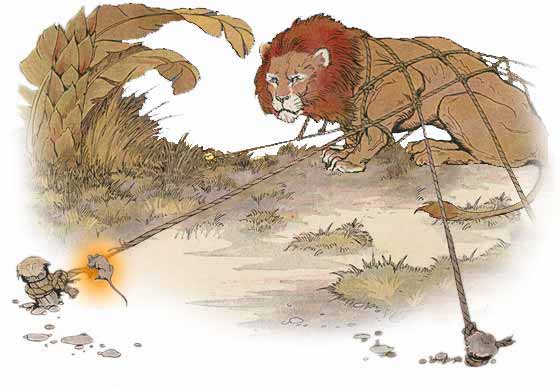
Some days later, while stalking his prey in the forest, the Lion was caught in the toils of a hunter's net. Unable to free himself, he filled the forest with his angry roaring. The Mouse knew the voice and quickly found the Lion struggling in the net. Running to one of the great ropes that bound him, she gnawed it until it parted, and soon the Lion was free.
"You laughed when I said I would repay you," said the Mouse. "Now you see that even a Mouse can help a Lion."
Moral: A kindness is never wasted.
狮子和老鼠 (中文翻译 拼音注音)
一头狮子躺在森林里睡着了,他的大头靠在他的爪子上。一只胆小的小老鼠不期而遇,吓得赶紧逃跑,从狮子的鼻子上跑过。 狮子从午睡中醒来,愤怒地用巨大的爪子抓住这只小老鼠,要杀了它。
“放过我!” 可怜的老鼠恳求道。“请放开我,总有一天我一定会回报你的。”
狮子想到老鼠可以帮助他,觉得很有趣。但他很宽容,最后放了老鼠。
几天后,狮子在森林中跟踪猎物时,被猎人的渔网困住了。他无法救自己,愤怒的咆哮响彻了森林。 老鼠听到了熟悉的声音,很快就发现了在网中挣扎的狮子。它跑向捆绑他的一根大绳子,把绳子咬断,很快狮子就自由了。
“当我说我会回报你的时候,你笑了,” 老鼠说。“现在你明白了,即使是老鼠也能帮助狮子。”


Relevant Fables 相关寓言故事
- 伊索寓言:The Town Mouse and the Country Mouse 城市老鼠和乡村老鼠
- 伊索寓言:The Frog and the Mouse 青蛙和老鼠
- 伊索寓言:The Lion and the Ass 狮子和驴
- 伊索寓言:The Rat and the Elephant 老鼠和大象
- 伊索寓言:The Lion and the Gnat 狮子和蚊子
- 伊索寓言:The Ass the Fox and the Lion 驴,狐狸和狮子
- 伊索寓言:The Lion the Bear and the Fox 狮子、熊和狐狸
- 伊索寓言:The Wolf and the Lion 狼和狮子
- 伊索寓言:The Mice and the Weasels 老鼠和黄鼠狼
- 伊索寓言:The Fox and the Lion 狐狸和狮子
- 伊索寓言:The Cat the Cock and the Young Mouse 猫、公鸡和小老鼠
- 伊索寓言:The Mouse and the Weasel 老鼠和鼬
- 伊索寓言:Three Bullocks and a lion 三头公牛和一只狮子
- 伊索寓言:The Old Lion and the Fox 年迈的狮子和狐狸
- 伊索寓言:The Man and the Lion 人和狮子
- 伊索寓言:The Old Lion 年迈的狮子
- 伊索寓言:The Shepherd and the Lion 牧羊人和狮子
- 伊索寓言:The Cat and the Old Rat 猫和年迈的老鼠
About 关于
The Aesop Fables for Children 伊索寓言儿童故事全集 (图文英汉双语版) (this work), the english fables originally from The Aesop for Children: with Pictures by Milo Winter published by Rand, McNally & Co in 1919. Some of pictures come from Library of Congress. This work is considered to be in the public domain in the United States. The Aesop Fables for Children contains the text of selected fables, color pictures, video, and interactive animations, and will be enjoyed by readers of any age.
The Aesop Fables for Children are a collection of stories designed to teach moral lessons credited to Aesop, a Greek slave and story-teller thought to have lived between 620 and 560 BCE.
Aesop's fables are some of the most well known in the world and have been translated in multiple languages and become popular in dozens of cultures through the course of five centuries. They have been told and retold in a variety of media, from oral tradition to written storybooks to stage, film and animated cartoon versions—even in architecture. This page include translation to Simplified Chinese.
伊索寓言是一部世界上最早的寓言故事集,是世界文学史上流传最广的寓言故事之一。 本文包含伊索寓言故事英文原文和简体中文翻译(中英双语)。
