The Hare and His Ears 野兔和它的耳朵 (精美插图) 双语 拼音注音 伊索寓言
标签:伊索寓言 儿童故事集 中英对照翻译 双语故事 拼音注音
Last Update 最后更新: 2022-01-12
The Hare and His Ears (English)
Total Words: 186
The Lion had been badly hurt by the horns of a Goat, which he was eating. He was very angry to think that any animal that he chose for a meal, should be so brazen as to wear such dangerous things as horns to scratch him while he ate. So he commanded that all animals with horns should leave his domains within twenty-four hours.
The command struck terror among the beasts. All those who were so unfortunate as to have horns, began to pack up and move out. Even the Hare, who, as you know, has no horns and so had nothing to fear, passed a very restless night, dreaming awful dreams about the fearful Lion.
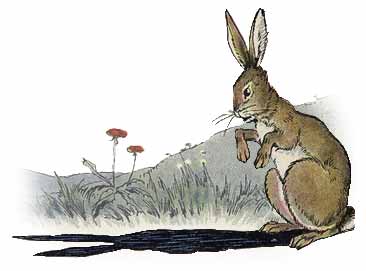
And when he came out of the warren in the early morning sunshine, and there saw the shadow cast by his long and pointed ears, a terrible fright seized him.
"Goodby, neighbor Cricket," he called. "I'm off. He will certainly make out that my ears are horns, no matter what I say."
Moral: Do not give your enemies the slightest reason to attack your reputation. Your enemies will seize any excuse to attack you.
野兔和它的耳朵 (中文翻译 拼音注音)
有一头狮子在吃山羊的时候,被羊角给伤的很重。它一想到自己在享用猎物的时候,会被它们那危险的角给厚颜无耻地刮伤,就非常气愤。于是,它下令所有带有角的动物必须在24小时内离开自己的领地。
这个命令让动物们深感恐惧。所有长有角的动物都只好收拾行囊、搬离家园。甚至那没有角、根本无需担心的野兔,那个夜晚也是睡不安慰,因为那可怕的狮子总是出现在它的梦里。
当它从窝里爬出来的时候,正值晨光初露,而它投射在地上的影子有着又长又尖的耳朵,这令它恐惧不已。
“再见了,蛐蛐邻居,” 它说道。“我也要走了。不过我说什么,那头狮子都会认为我的耳朵就跟羊角一样。”


Relevant Fables 相关寓言故事
- 伊索寓言:The Hare and the Tortoise 龟兔赛跑
- 伊索寓言:The Hares and the Frogs 野兔和青蛙
- 伊索寓言:The Rabbit the Weasel and the Cat 兔子、黄鼠狼和猫
About 关于
The Aesop Fables for Children 伊索寓言儿童故事全集 (图文英汉双语版) (this work), the english fables originally from The Aesop for Children: with Pictures by Milo Winter published by Rand, McNally & Co in 1919. Some of pictures come from Library of Congress. This work is considered to be in the public domain in the United States. The Aesop Fables for Children contains the text of selected fables, color pictures, video, and interactive animations, and will be enjoyed by readers of any age.
The Aesop Fables for Children are a collection of stories designed to teach moral lessons credited to Aesop, a Greek slave and story-teller thought to have lived between 620 and 560 BCE.
Aesop's fables are some of the most well known in the world and have been translated in multiple languages and become popular in dozens of cultures through the course of five centuries. They have been told and retold in a variety of media, from oral tradition to written storybooks to stage, film and animated cartoon versions—even in architecture. This page include translation to Simplified Chinese.
伊索寓言是一部世界上最早的寓言故事集,是世界文学史上流传最广的寓言故事之一。 本文包含伊索寓言故事英文原文和简体中文翻译(中英双语)。
