The Hare and the Tortoise 龟兔赛跑 (精美插图) 双语 拼音注音 伊索寓言
标签:伊索寓言 儿童故事集 中英对照翻译 双语故事 拼音注音
Last Update 最后更新: 2022-01-12
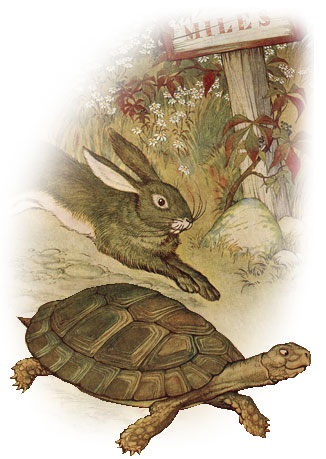
The Hare and the Tortoise (English)
Total Words: 191
A Hare was making fun of the Tortoise one day for being so slow.
"Do you ever get anywhere?" he asked with a mocking laugh.
"Yes," replied the Tortoise, " and I get there sooner than you think. I'll run you a race and prove it."
The Hare was much amused at the idea of running a race with the Tortoise, but for the fun of the thing he agreed. So the Fox, who had consented to act as judge, marked the distance and started the runners off.
The Hare was soon far out of sight, and to make the Tortoise feel very deeply how ridiculous it was for him to try a race with a Hare, he lay down beside the course to take a nap until the Tortoise should catch up.
The Tortoise meanwhile kept going slowly but steadily, and, after a time, passed the place where the Hare was sleeping. But the Hare slept on very peacefully; and when at last he did wake up, the Tortoise was near the goal. The Hare now ran his swiftest, but he could not overtake the Tortoise in time.
Moral: The race is not always to the swift.
龟兔赛跑 (中文翻译 拼音注音)
有一天,一只兔子嘲笑乌龟太慢了。
“你有没有到过任何地方?” 他嘲讽地笑着问道。
“是的,” 乌龟回答说,“我比你想象的要早到。我会和你赛跑并证明这一点。”
兔子对与乌龟赛跑的想法很感兴趣,但为了好玩,他同意了。因此,同意担任裁判的狐狸标记了距离并让参赛者开始了比赛。
兔子很快就不见了踪影,为了让乌龟深深地感受到他和兔子赛跑是多么荒谬,他在赛道旁边躺下小睡,直到乌龟赶上。
与此同时,乌龟继续缓慢而稳定地前进,过了一会儿,经过了兔子睡觉的地方。但是兔子睡得很安详;当他终于醒来时,乌龟已经接近目标了。兔子现在已他最快的速度追赶,但他已无法及时赶上乌龟。


Relevant Fables 相关寓言故事
- 伊索寓言:The Hare and His Ears 野兔和它的耳朵
- 伊索寓言:The Tortoise and the Ducks 乌龟和鸭
- 伊索寓言:The Hares and the Frogs 野兔和青蛙
- 伊索寓言:The Rabbit the Weasel and the Cat 兔子、黄鼠狼和猫
About 关于
The Aesop Fables for Children 伊索寓言儿童故事全集 (图文英汉双语版) (this work), the english fables originally from The Aesop for Children: with Pictures by Milo Winter published by Rand, McNally & Co in 1919. Some of pictures come from Library of Congress. This work is considered to be in the public domain in the United States. The Aesop Fables for Children contains the text of selected fables, color pictures, video, and interactive animations, and will be enjoyed by readers of any age.
The Aesop Fables for Children are a collection of stories designed to teach moral lessons credited to Aesop, a Greek slave and story-teller thought to have lived between 620 and 560 BCE.
Aesop's fables are some of the most well known in the world and have been translated in multiple languages and become popular in dozens of cultures through the course of five centuries. They have been told and retold in a variety of media, from oral tradition to written storybooks to stage, film and animated cartoon versions—even in architecture. This page include translation to Simplified Chinese.
伊索寓言是一部世界上最早的寓言故事集,是世界文学史上流传最广的寓言故事之一。 本文包含伊索寓言故事英文原文和简体中文翻译(中英双语)。
