The Monkey and the Cat 猴子和猫 (精美插图) 双语 拼音注音 伊索寓言
标签:伊索寓言 儿童故事集 中英对照翻译 双语故事 拼音注音
Last Update 最后更新: 2022-01-12
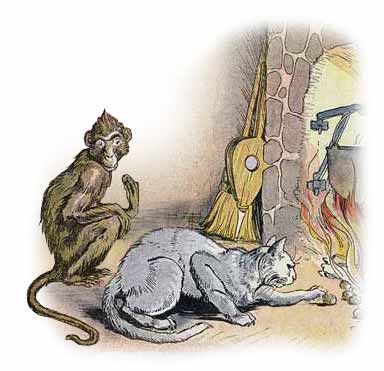
The Monkey and the Cat (English)
Total Words: 226
Once upon a time a Cat and a Monkey lived as pets in the same house. They were great friends and were constantly in all sorts of mischief together. What they seemed to think of more than anything else was to get something to eat, and it did not matter much to them how they got it.
One day they were sitting by the fire, watching some chestnuts roasting on the hearth. How to get them was the question.
"I would gladly get them," said the cunning Monkey, "but you are much more skillful at such things than I am. Pull them out and I'll divide them between us."
Pussy stretched out her paw very carefully, pushed aside some of the cinders, and drew back her paw very quickly. Then she tried it again, this time pulling a chestnut half out of the fire. A third time and she drew out the chestnut. This performance she went through several times, each time singeing her paw severely. As fast as she pulled the chestnuts out of the fire, the Monkey ate them up.
Now the master came in, and away scampered the rascals, Mistress Cat with a burnt paw and no chestnuts. From that time on, they say, she contented herself with mice and rats and had little to do with Sir Monkey.
Moral: The flatterer seeks some benefit at your expense.
猴子和猫 (中文翻译 拼音注音)
很久以前,有一只猫和一只猴子被人当作宠物养在屋里。它俩非常要好,总是一起弄出各种各样的恶作剧。它们只在乎找点能吃的东西就行,可不会管如何找到这些吃的。
有一天,它们坐在火炉旁,看着炉子上正烤着的栗子。却被如何得到它们给难住了。
“我倒是很想去火中取栗,” 狡猾的猴子说,“不过这种事情,你比我更有经验。你把它们拿出来,我俩对半分。”
猫咪非常谨慎地把爪子伸过去,刚刨开了一点儿煤渣,就立马把缩了回来。然后它又试了一次,这次它从炉火中刨了半个栗子出来。第三次的时候,它终于把整个栗子从火中取了出来。这样重复了很多次的它,每次都很严重地烫伤了自己的爪子。然而,只要它把栗子一取出来,猴子就把它们吃了个精光。
正在这时,主人进来了,这俩偷吃贼立马就溜了出去,而那只猫咪不仅烧伤了自己的爪子,而且连一个栗子也没吃着。人们就说,从那时候起,猫咪就已捕捉老鼠为乐,再也不想和猴子打交道了。


Relevant Fables 相关寓言故事
- 伊索寓言:Belling the Cat 猫颈系铃
- 伊索寓言:The Monkey and the Camel abc
- 伊索寓言:The Monkey and the Dolphin 猴子和海豚
- 伊索寓言:The Rabbit the Weasel and the Cat 兔子、黄鼠狼和猫
- 伊索寓言:The Cat the Cock and the Young Mouse 猫、公鸡和小老鼠
- 伊索寓言:The Cat and the Birds 猫和鸟
- 伊索寓言:The Cat and the Fox 猫和狐狸
- 伊索寓言:The Fox and the Monkey 狐狸和猴子
- 伊索寓言:The Cat and the Old Rat 猫和年迈的老鼠
About 关于
The Aesop Fables for Children 伊索寓言儿童故事全集 (图文英汉双语版) (this work), the english fables originally from The Aesop for Children: with Pictures by Milo Winter published by Rand, McNally & Co in 1919. Some of pictures come from Library of Congress. This work is considered to be in the public domain in the United States. The Aesop Fables for Children contains the text of selected fables, color pictures, video, and interactive animations, and will be enjoyed by readers of any age.
The Aesop Fables for Children are a collection of stories designed to teach moral lessons credited to Aesop, a Greek slave and story-teller thought to have lived between 620 and 560 BCE.
Aesop's fables are some of the most well known in the world and have been translated in multiple languages and become popular in dozens of cultures through the course of five centuries. They have been told and retold in a variety of media, from oral tradition to written storybooks to stage, film and animated cartoon versions—even in architecture. This page include translation to Simplified Chinese.
伊索寓言是一部世界上最早的寓言故事集,是世界文学史上流传最广的寓言故事之一。 本文包含伊索寓言故事英文原文和简体中文翻译(中英双语)。
