The Owl and the Grasshopper 猫头鹰和蚱蜢 (精美插图) 双语 拼音注音 伊索寓言
标签:伊索寓言 儿童故事集 中英对照翻译 双语故事 拼音注音
Last Update 最后更新: 2022-01-12
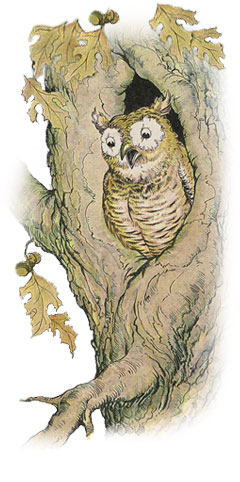
The Owl and the Grasshopper (English)
Total Words: 391
The Owl always takes her sleep during the day. Then after sundown, when the rosy light fades from the sky and the shadows rise slowly through the wood, out she comes ruffling and blinking from the old hollow tree. Now her weird "hoo-hoo-hoo-oo-oo" echoes through the quiet wood, and she begins her hunt for the bugs and beetles, frogs and mice she likes so well to eat.
Now there was a certain old Owl who had become very cross and hard to please as she grew older, especially if anything disturbed her daily slumbers. One warm summer afternoon as she dozed away in her den in the old oak tree, a Grasshopper nearby began a joyous but very raspy song. Out popped the old Owl's head from the opening in the tree that served her both for door and for window.
"Get away from here, sir," she said to the Grasshopper. "Have you no manners? You should at least respect my age and leave me to sleep in quiet!"
But the Grasshopper answered saucily that he had as much right to his place in the sun as the Owl had to her place in the old oak. Then he struck up a louder and still more rasping tune.
The wise old Owl knew quite well that it would do no good to argue with the Grasshopper, nor with anybody else for that matter. Besides, her eyes were not sharp enough by day to permit her to punish the Grasshopper as he deserved. So she laid aside all hard words and spoke very kindly to him.
"Well sir," she said, "if I must stay awake, I am going to settle right down to enjoy your singing. Now that I think of it, I have a wonderful wine here, sent me from Olympus, of which I am told Apollo drinks before he sings to the high gods. Please come up and taste this delicious drink with me. I know it will make you sing like Apollo himself."
The foolish Grasshopper was taken in by the Owl's flattering words. Up he jumped to the Owl's den, but as soon as he was near enough so the old Owl could see him clearly, she pounced upon him and ate him up.
Moral: Flattery is not a proof of true admiration. Do not let flattery throw you off your guard against an enemy.
猫头鹰和蚱蜢 (中文翻译 拼音注音)
猫头鹰总是在白天睡觉。夕阳西沉后,天边的粉色霞光开始渐渐褪去,夜色随之缓缓降临,这时候,猫头鹰就会捋一捋自己的羽毛,眨着眼从一棵空心树里走出来。她发出“呼呼呜呜”的叫声,诡异地回荡在寂静的林子里,接着就去捕食虫子和甲虫,青蛙和老鼠也是她的所爱。
有这么一只上了年纪的猫头鹰,由于她日渐衰老,脾气开始变得暴躁又挑剔,要是有什么东西打搅了她的白日梦,情况就更糟了。一个夏日的午后,暖洋洋的,正当她在自己位于一棵老橡树中的窝里打盹的时候,附近的一只蚱蜢却唱起欢快又刺耳的歌。老猫头鹰从树上那既是房门也是窗子的开口处,伸出头向外望去。
”先生,请你走远点,” 她对那只蚱蜢说道。“你不懂礼貌吗?至少你应该尊重下我这个老婆子,让我安安静静的休息。”
然而,那只蚱蜢却傲慢地说,既然猫头鹰可以把家安在老橡树里,他也一样可以住在阳光里。接着,他的曲调就变得更加响亮、更加刺耳了。
智慧而年迈的猫头鹰很清楚地知道,与一只蚱蜢争论是毫无益处的,与其他人争论那个问题也是一样的。除此之外,她的双眼在白天也不够敏锐,也就不能让她惩罚那只蚱蜢。于是,她就一改尖酸的刻薄话,对蚱蜢友善地说道。
”好吧,先生,” 她说,“如果你坚持不让我休息的话,那么我就只好下到你那里好好地欣赏你的歌唱了。我还差点忘了,我这儿还有一坛陈年佳酿,大老远从奥林匹斯来的,据说阿波罗喝酒前,都会向诸神献歌。我相信,喝了这坛酒,保管你唱歌就像阿波罗一样。”
愚笨的蚱蜢被猫头鹰的连篇好话哄得高兴极了,接着就跳到了猫头鹰的窝上去。可是,一当猫头鹰距离蚱蜢足够近能够看清他的时候,她就猛扑过去,吃掉了蚱蜢。


Relevant Fables 相关寓言故事
About 关于
The Aesop Fables for Children 伊索寓言儿童故事全集 (图文英汉双语版) (this work), the english fables originally from The Aesop for Children: with Pictures by Milo Winter published by Rand, McNally & Co in 1919. Some of pictures come from Library of Congress. This work is considered to be in the public domain in the United States. The Aesop Fables for Children contains the text of selected fables, color pictures, video, and interactive animations, and will be enjoyed by readers of any age.
The Aesop Fables for Children are a collection of stories designed to teach moral lessons credited to Aesop, a Greek slave and story-teller thought to have lived between 620 and 560 BCE.
Aesop's fables are some of the most well known in the world and have been translated in multiple languages and become popular in dozens of cultures through the course of five centuries. They have been told and retold in a variety of media, from oral tradition to written storybooks to stage, film and animated cartoon versions—even in architecture. This page include translation to Simplified Chinese.
伊索寓言是一部世界上最早的寓言故事集,是世界文学史上流传最广的寓言故事之一。 本文包含伊索寓言故事英文原文和简体中文翻译(中英双语)。
