The Ant and the Dove 蚂蚁和鸽子 (精美插图) 双语 拼音注音 伊索寓言
标签:伊索寓言 儿童故事集 中英对照翻译 双语故事 拼音注音
Last Update 最后更新: 2022-01-12
The Ant and the Dove (English)
Total Words: 103
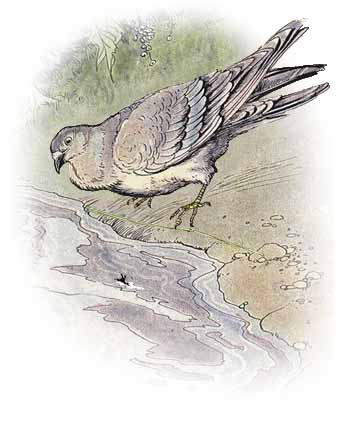
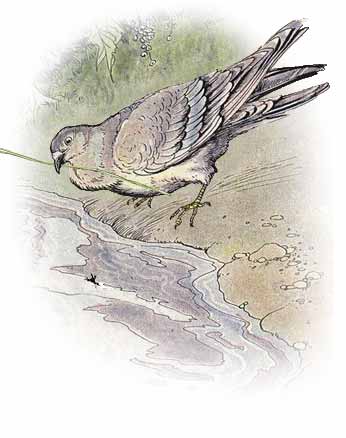
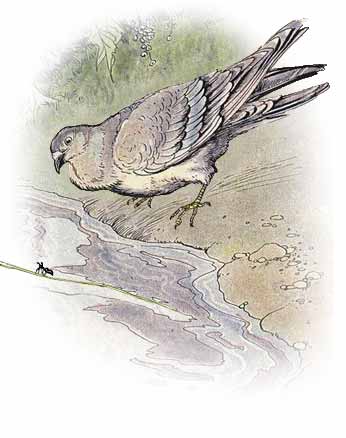
A Dove saw an Ant fall into a brook. The Ant struggled in vain to reach the bank, and in pity, the Dove dropped a blade of straw close beside it. Clinging to the straw like a shipwrecked sailor to a broken spar, the Ant floated safely to shore.
Soon after, the Ant saw a man getting ready to kill the Dove with a stone. But just as he cast the stone, the Ant stung him in the heel, so that the pain made him miss his aim, and the startled Dove flew to safety in a distant wood.
Moral: A kindness is never wasted.
蚂蚁和鸽子 (中文翻译 拼音注音)
一只鸽子看到一只蚂蚁掉进了小溪里。 蚂蚁徒劳地挣扎着想游上岸。处于怜悯,鸽子将一根稻草放在在蚂蚁旁边。蚂蚁紧紧抓住稻草,就像遇船难的水手抓住折断的桅杆一样,小蚂蚁安全地靠着它游上了岸。
不久之后,蚂蚁看到一个人准备用石头打死救它的鸽子。 但就在他扔石头的时候,蚂蚁叮了他的脚后跟,疼痛让他没能命中,受惊的鸽子立马飞到了远处安全的林子里。


Relevant Fables 相关寓言故事
About 关于
The Aesop Fables for Children 伊索寓言儿童故事全集 (图文英汉双语版) (this work), the english fables originally from The Aesop for Children: with Pictures by Milo Winter published by Rand, McNally & Co in 1919. Some of pictures come from Library of Congress. This work is considered to be in the public domain in the United States. The Aesop Fables for Children contains the text of selected fables, color pictures, video, and interactive animations, and will be enjoyed by readers of any age.
The Aesop Fables for Children are a collection of stories designed to teach moral lessons credited to Aesop, a Greek slave and story-teller thought to have lived between 620 and 560 BCE.
Aesop's fables are some of the most well known in the world and have been translated in multiple languages and become popular in dozens of cultures through the course of five centuries. They have been told and retold in a variety of media, from oral tradition to written storybooks to stage, film and animated cartoon versions—even in architecture. This page include translation to Simplified Chinese.
伊索寓言是一部世界上最早的寓言故事集,是世界文学史上流传最广的寓言故事之一。 本文包含伊索寓言故事英文原文和简体中文翻译(中英双语)。
