The Peacock and the Crane 孔雀与鹤 (精美插图) 双语 拼音注音 伊索寓言
标签:伊索寓言 儿童故事集 中英对照翻译 双语故事 拼音注音
Last Update 最后更新: 2022-01-12
The Peacock and the Crane (English)
Total Words: 102
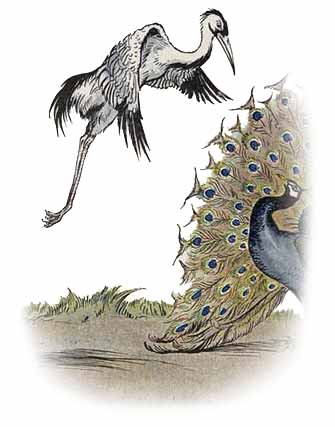
A Peacock, puffed up with vanity, met a Crane one day, and to impress him spread his gorgeous tail in the Sun.
"Look," he said. "What have you to compare with this? I am dressed in all the glory of the rainbow, while your feathers are gray as dust!"
The Crane spread his broad wings and flew up toward the sun.
"Follow me if you can," he said. But the Peacock stood where he was among the birds of the barnyard, while the Crane soared in freedom far up into the blue sky.
Moral: The useful is of much more importance and value, than the ornamental.
孔雀与鹤 (中文翻译 拼音注音)
有一天,一只虚荣心很强的孔雀遇见了一只鹤,为了得到鹤的赞美,他就在阳光下展开了他那华丽的尾羽。
“你瞧,” 他说道。“你能跟我的羽毛比比吗?我身披七彩霞光,而你的就太老土了!”
鹤伸展开他那宽阔的翅膀,飞向了太阳。
“你跟我飞吧。” 鹤答道。不过,当那只孔雀站在农场其它家禽之间的时候,那只鹤则自由地翱翔在蓝天之上。


Relevant Fables 相关寓言故事
About 关于
The Aesop Fables for Children 伊索寓言儿童故事全集 (图文英汉双语版) (this work), the english fables originally from The Aesop for Children: with Pictures by Milo Winter published by Rand, McNally & Co in 1919. Some of pictures come from Library of Congress. This work is considered to be in the public domain in the United States. The Aesop Fables for Children contains the text of selected fables, color pictures, video, and interactive animations, and will be enjoyed by readers of any age.
The Aesop Fables for Children are a collection of stories designed to teach moral lessons credited to Aesop, a Greek slave and story-teller thought to have lived between 620 and 560 BCE.
Aesop's fables are some of the most well known in the world and have been translated in multiple languages and become popular in dozens of cultures through the course of five centuries. They have been told and retold in a variety of media, from oral tradition to written storybooks to stage, film and animated cartoon versions—even in architecture. This page include translation to Simplified Chinese.
伊索寓言是一部世界上最早的寓言故事集,是世界文学史上流传最广的寓言故事之一。 本文包含伊索寓言故事英文原文和简体中文翻译(中英双语)。
