The Man and the Satyr 人和萨梯 (精美插图) 双语 拼音注音 伊索寓言
标签:伊索寓言 儿童故事集 中英对照翻译 双语故事 拼音注音
Last Update 最后更新: 2022-01-12
The Man and the Satyr (English)
Total Words: 168
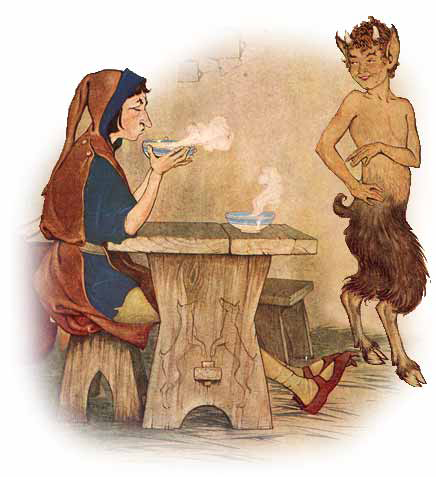
A long time ago a Man met a Satyr in the forest and succeeded in making friends with him. The two soon became the best of comrades, living together in the Man's hut. But one cold winter evening, as they were walking homeward, the Satyr saw the Man blow on his fingers.
"Why do you do that?" asked the Satyr.
"To warm my hands," the Man replied.
When they reached home the Man prepared two bowls of porridge. These he placed steaming hot on the table, and the comrades sat down very cheerfully to enjoy the meal. But much to the Satyr's surprise, the Man began to blow into his bowl of porridge.
"Why do you do that?" he asked.
"To cool my porridge," replied the Man.
The Satyr sprang hurriedly to his feet and made for the door.
"Goodby," he said, "I've seen enough. A fellow that blows hot and cold in the same breath cannot be friends with me!"
Moral: The man who talks for both sides is not to be trusted by either.
人和萨梯 (中文翻译 拼音注音)
很久以前,有一个人在森林里遇到了一个萨梯(希腊神话中森林之神),并成功地与之结成了朋友关系。这俩很快就成了关系十分要好的伙伴,并一起住在这个人的小木屋里。但是,在一个寒冷的冬夜里,正当他们一起走在回家的路上,萨梯看见这人对着自己的手吹气。
“你为什么那样做呢?” 萨梯问道。
“这样可以令我的双手保持暖和,” 这人答道。
当他俩回到小屋里时,这人就准备了两碗粥。他把这两碗热气腾腾的粥放在桌子上,就和他的伙伴一起坐下来美美地享用这顿晚餐。
然而,令萨梯大感意外的是,这个人又对着自己那碗粥吹气。
“你为啥那样做呢?” 萨梯问道。
“好让我的粥尽快冷下来,” 这人答道。
萨梯就赶紧站了起来,向门口走去。
“再见了,” 萨梯说道,“我见得够多了。一个反复无常的家伙是不可能成为我的朋友的!”


Relevant Fables 相关寓言故事
- 伊索寓言:Hercules and the Wagoner 大力神海格力斯和车夫
- 伊索寓言:The Ass and His Driver 驴和赶驴人
- 伊索寓言:The Leap at Rhodes 在罗兹市的一次跳跃
- 伊索寓言:Mercury and the Woodman 金斧头和樵夫
- 伊索寓言:The Man and the Lion 人和狮子
About 关于
The Aesop Fables for Children 伊索寓言儿童故事全集 (图文英汉双语版) (this work), the english fables originally from The Aesop for Children: with Pictures by Milo Winter published by Rand, McNally & Co in 1919. Some of pictures come from Library of Congress. This work is considered to be in the public domain in the United States. The Aesop Fables for Children contains the text of selected fables, color pictures, video, and interactive animations, and will be enjoyed by readers of any age.
The Aesop Fables for Children are a collection of stories designed to teach moral lessons credited to Aesop, a Greek slave and story-teller thought to have lived between 620 and 560 BCE.
Aesop's fables are some of the most well known in the world and have been translated in multiple languages and become popular in dozens of cultures through the course of five centuries. They have been told and retold in a variety of media, from oral tradition to written storybooks to stage, film and animated cartoon versions—even in architecture. This page include translation to Simplified Chinese.
伊索寓言是一部世界上最早的寓言故事集,是世界文学史上流传最广的寓言故事之一。 本文包含伊索寓言故事英文原文和简体中文翻译(中英双语)。
