The Frogs Who Wished for a King 想要一个国王的青蛙 (精美插图) 双语 拼音注音 伊索寓言
标签:伊索寓言 儿童故事集 中英对照翻译 双语故事 拼音注音
Last Update 最后更新: 2022-01-12
The Frogs Who Wished for a King (English)
Total Words: 283
The Frogs were tired of governing themselves. They had so much freedom that it had spoiled them, and they did nothing but sit around croaking in a bored manner and wishing for a government that could entertain them with the pomp and display of royalty, and rule them in a way to make them know they were being ruled. No milk and water government for them, they declared. So they sent a petition to Jupiter asking for a king.
Jupiter saw what simple and foolish creatures they were, but to keep them quiet and make them think they had a king he threw down a huge log, which fell into the water with a great splash. The Frogs hid themselves among the reeds and grasses, thinking the new king to be some fearful giant. But they soon discovered how tame and peaceable King Log was. In a short time the younger Frogs were using him for a diving platform, while the older Frogs made him a meeting place, where they complained loudly to Jupiter about the government.
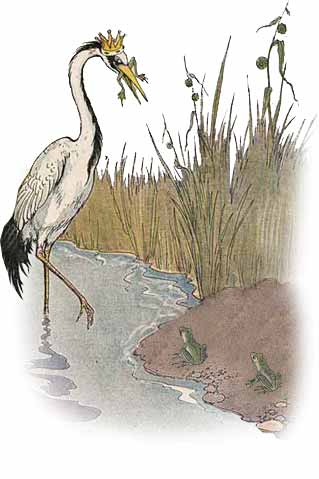
To teach the Frogs a lesson the ruler of the gods now sent a Crane to be king of Frogland. The Crane proved to be a very different sort of king from old King Log. He gobbled up the poor Frogs right and left and they soon saw what fools they had been. In mournful croaks they begged Jupiter to take away the cruel tyrant before they should all be destroyed.
"How now!" cried Jupiter "Are you not yet content? You have what you asked for and so you have only yourselves to blame for your misfortunes."
Moral: Be sure you can better your condition before you seek to change.
想要一个国王的青蛙 (中文翻译 拼音注音)
从前有一群青蛙对自治制度感到很厌烦。他们生活得太自由,都被宠坏了,整天只是坐在那里无聊地呱呱叫,于是希望可以有一个充满皇室派头的统治者来统治他们,让他们感受一下来自别人的管治。但是他们想要的不只是一个普通的管理者。于是青蛙们请求朱庇特神赐给他们一个国王。
在朱庇特眼中,他们只是一群头脑简单愚蠢的生物,但是为了摆脱来自青蛙的烦扰,让他们以为自己有一个国王,朱庇特神扔给他们一根圆木,这根原木掉进了池塘, 溅起了大大的水花。青蛙们吓得躲在芦苇和草丛里面,因为他们以为这个新国王是一个可怕的巨人。但他们很快就发现,圆木国王是那么的温顺平和。不久,小青蛙 们就把圆木当作跳水台,而老青蛙们则把它当作会议厅,在那里向朱庇特神大声抱怨圆木国王管理不力。
为了教训一下这些青蛙,朱庇特神这次赐给他们一只白鶴来当青蛙国国王。和之前的圆木国王相比,白鹤到处吞食这些可怜的青蛙,它们很快便明白了自己真是太愚蠢了。这时,青蛙们才明白自己当初是多么的愚蠢。追悔莫及的青蛙们请求朱庇特在他们全被吃光以前带走这个残酷的暴君。
“现在又怎么了!” 朱庇特不耐烦地说道 “你们还不满意吗?你们已经得到自己想要的了,所以,你们的不幸只能怪你们自己。”


Relevant Fables 相关寓言故事
- 伊索寓言:The Frogs and the Ox 青蛙和牛
- 伊索寓言:The Frog and the Mouse 青蛙和老鼠
- 伊索寓言:The Boys and the Frogs 男孩和青蛙
- 伊索寓言:The Hares and the Frogs 野兔和青蛙
- 伊索寓言:The Fighting Bulls and the Frog 决斗的公牛与青蛙
About 关于
The Aesop Fables for Children 伊索寓言儿童故事全集 (图文英汉双语版) (this work), the english fables originally from The Aesop for Children: with Pictures by Milo Winter published by Rand, McNally & Co in 1919. Some of pictures come from Library of Congress. This work is considered to be in the public domain in the United States. The Aesop Fables for Children contains the text of selected fables, color pictures, video, and interactive animations, and will be enjoyed by readers of any age.
The Aesop Fables for Children are a collection of stories designed to teach moral lessons credited to Aesop, a Greek slave and story-teller thought to have lived between 620 and 560 BCE.
Aesop's fables are some of the most well known in the world and have been translated in multiple languages and become popular in dozens of cultures through the course of five centuries. They have been told and retold in a variety of media, from oral tradition to written storybooks to stage, film and animated cartoon versions—even in architecture. This page include translation to Simplified Chinese.
伊索寓言是一部世界上最早的寓言故事集,是世界文学史上流传最广的寓言故事之一。 本文包含伊索寓言故事英文原文和简体中文翻译(中英双语)。
