The Frog and the Mouse 青蛙和老鼠 (精美插图) 双语 拼音注音 伊索寓言
标签:伊索寓言 儿童故事集 中英对照翻译 双语故事 拼音注音
Last Update 最后更新: 2022-01-12
The Frog and the Mouse (English)
Total Words: 222
A young Mouse in search of adventure was running along the bank of a pond where lived a Frog. When the Frog saw the Mouse, he swam to the bank and croaked:
"Won't you pay me a visit? I can promise you a good time if you do."
The Mouse did not need much coaxing, for he was very anxious to see the world and everything in it. But though he could swim a little, he did not dare risk going into the pond without some help.
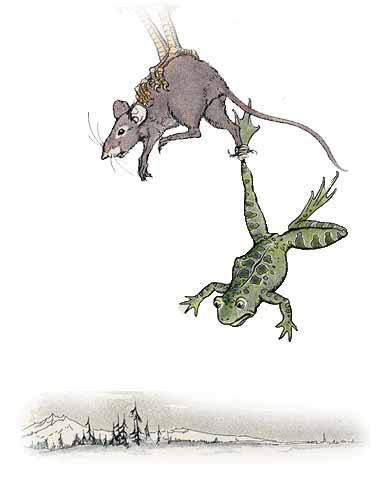
The Frog had a plan. He tied the Mouse's leg to his own with a tough reed. Then into the pond he jumped, dragging his foolish companion with him. The Mouse soon had enough of it and wanted to return to shore; but the treacherous Frog had other plans. He pulled the Mouse down under the water and drowned him. But before he could untie the reed that bound him to the dead Mouse, a Hawk came sailing over the pond. Seeing the body of the Mouse floating on the water, the Hawk swooped down, seized the Mouse and carried it off, with the Frog dangling from its leg. Thus at one swoop he had caught both meat and fish for his dinner.
Moral: Those who seek to harm others often come to harm themselves through their own deceit.
青蛙和老鼠 (中文翻译 拼音注音)
一只寻找冒险的小老鼠正沿着池塘的岸边奔跑,那里住着一只青蛙。青蛙看到老鼠,就游到岸边呲牙咧嘴地说:
“你不来看看我吗?如果你来,我会让你玩得很开心的。”
老鼠不需要太多的哄骗,因为他非常渴望看到这个世界和其中的一切。可他虽然会游泳,但在没有人帮助的情况下,他也不敢冒险下水。
青蛙有一个计划。他用一根坚硬的芦苇把老鼠的腿绑在自己的腿上。然后他跳进池塘,拖着他愚蠢的同伴。老鼠很快就受够了,想要返回岸边;但奸诈的青蛙另有打算。他把老鼠拉到水下淹死了。但还没等他解开绑在死老鼠身上的芦苇,一只鹰从池塘上飞了过来。鹰看到老鼠的尸体漂浮在水面上,猛扑下来,抓住老鼠把它带走,青蛙从它的腿上晃来晃去。这样一来,他的晚餐就捕到了肉和鱼。


Relevant Fables 相关寓言故事
- 伊索寓言:The Frogs and the Ox 青蛙和牛
- 伊索寓言:The Town Mouse and the Country Mouse 城市老鼠和乡村老鼠
- 伊索寓言:The Lion and the Mouse 狮子和老鼠
- 伊索寓言:The Frogs Who Wished for a King 想要一个国王的青蛙
- 伊索寓言:The Rat and the Elephant 老鼠和大象
- 伊索寓言:The Boys and the Frogs 男孩和青蛙
- 伊索寓言:The Hares and the Frogs 野兔和青蛙
- 伊索寓言:The Mice and the Weasels 老鼠和黄鼠狼
- 伊索寓言:The Cat the Cock and the Young Mouse 猫、公鸡和小老鼠
- 伊索寓言:The Fighting Bulls and the Frog 决斗的公牛与青蛙
- 伊索寓言:The Mouse and the Weasel 老鼠和鼬
- 伊索寓言:The Cat and the Old Rat 猫和年迈的老鼠
About 关于
The Aesop Fables for Children 伊索寓言儿童故事全集 (图文英汉双语版) (this work), the english fables originally from The Aesop for Children: with Pictures by Milo Winter published by Rand, McNally & Co in 1919. Some of pictures come from Library of Congress. This work is considered to be in the public domain in the United States. The Aesop Fables for Children contains the text of selected fables, color pictures, video, and interactive animations, and will be enjoyed by readers of any age.
The Aesop Fables for Children are a collection of stories designed to teach moral lessons credited to Aesop, a Greek slave and story-teller thought to have lived between 620 and 560 BCE.
Aesop's fables are some of the most well known in the world and have been translated in multiple languages and become popular in dozens of cultures through the course of five centuries. They have been told and retold in a variety of media, from oral tradition to written storybooks to stage, film and animated cartoon versions—even in architecture. This page include translation to Simplified Chinese.
伊索寓言是一部世界上最早的寓言故事集,是世界文学史上流传最广的寓言故事之一。 本文包含伊索寓言故事英文原文和简体中文翻译(中英双语)。
