The Bat and the Weasels 蝙蝠和黄鼠狼 (精美插图) 双语 拼音注音 伊索寓言
标签:伊索寓言 儿童故事集 中英对照翻译 双语故事 拼音注音
Last Update 最后更新: 2022-01-12
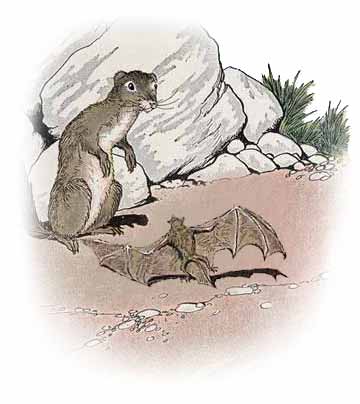
The Bat and the Weasels (English)
Total Words: 183
A Bat blundered into the nest of a Weasel, who ran up to catch and eat him. The Bat begged for his life, but the Weasel would not listen.
"You are a Mouse," he said, "and I am a sworn enemy of Mice. Every Mouse I catch, I am going to eat!"
"But I am not a Mouse!" cried the Bat. "Look at my wings. Can Mice fly? Why, I am only a Bird! Please let me go!"
The Weasel had to admit that the Bat was not a Mouse, so he let him go. But a few days later, the foolish Bat went blindly into the nest of another Weasel. This Weasel happened to be a bitter enemy of Birds, and he soon had the Bat under his claws, ready to eat him.
"You are a Bird," he said, "and I am going to eat you!"
"What," cried the Bat, "I, a Bird! Why, all Birds have feathers! I am nothing but a Mouse. 'Down with all Cats,' is my motto!"
And so the Bat escaped with his life a second time.
Moral: Set your sails with the wind.
蝙蝠和黄鼠狼 (中文翻译 拼音注音)
一只蝙蝠一不小心飞进了一只黄鼠狼的巢穴,黄鼠狼赶紧就抓住并想吃了它。蝙蝠乞求黄鼠狼能够放过它,但是黄鼠狼不愿意。
“你是只老鼠,” 黄鼠狼说,“况且我还是老鼠的天敌。抓住一只,我就吃掉一只。”
“可我不是老鼠啊!” 蝙蝠哭求道。“看看我的翅膀。老鼠会飞吗?天呐,我只是一只鸟!请放了我吧……”
黄鼠狼无奈地承认了,蝙蝠的确不是老鼠,因此就放了它一条生路。 但是几天过后,那愚蠢的蝙蝠又不小心飞进了另一只黄鼠狼的巢穴中。 这只黄鼠狼碰巧却是鸟类的宿敌,它很快就用爪子抓住了蝙蝠,并准备将其吃掉。
“你是只鸟,”这黄鼠狼说,“现在我就要吃了你!”
“什么?” 蝙蝠哭求着说,“我?怎么可能是只鸟!苍天,所有的鸟都有羽毛啊!我就是一只老鼠。我的座右铭是:‘打倒所有的猫!’”
于是,这只蝙蝠再一次虎口逃生。


Relevant Fables 相关寓言故事
- 伊索寓言:The Birds the Beasts and the Bat 飞禽、野兽和蝙蝠
- 伊索寓言:The Mice and the Weasels 老鼠和黄鼠狼
- 伊索寓言:The Rabbit the Weasel and the Cat 兔子、黄鼠狼和猫
- 伊索寓言:The Mouse and the Weasel 老鼠和鼬
About 关于
The Aesop Fables for Children 伊索寓言儿童故事全集 (图文英汉双语版) (this work), the english fables originally from The Aesop for Children: with Pictures by Milo Winter published by Rand, McNally & Co in 1919. Some of pictures come from Library of Congress. This work is considered to be in the public domain in the United States. The Aesop Fables for Children contains the text of selected fables, color pictures, video, and interactive animations, and will be enjoyed by readers of any age.
The Aesop Fables for Children are a collection of stories designed to teach moral lessons credited to Aesop, a Greek slave and story-teller thought to have lived between 620 and 560 BCE.
Aesop's fables are some of the most well known in the world and have been translated in multiple languages and become popular in dozens of cultures through the course of five centuries. They have been told and retold in a variety of media, from oral tradition to written storybooks to stage, film and animated cartoon versions—even in architecture. This page include translation to Simplified Chinese.
伊索寓言是一部世界上最早的寓言故事集,是世界文学史上流传最广的寓言故事之一。 本文包含伊索寓言故事英文原文和简体中文翻译(中英双语)。
