The Lion and the Gnat 狮子和蚊子 (精美插图) 双语 拼音注音 伊索寓言
标签:伊索寓言 儿童故事集 中英对照翻译 双语故事 拼音注音
Last Update 最后更新: 2022-01-12
The Lion and the Gnat (English)
Total Words: 180
"Away with you, vile insect!" said a Lion angrily to a Gnat that was buzzing around his head. But the Gnat was not in the least disturbed.
"Do you think," he said spitefully to the Lion, "that I am afraid of you because they call you king?"
The next instant he flew at the Lion and stung him sharply on the nose. Mad with rage, the Lion struck fiercely at the Gnat, but only succeeded in tearing himself with his claws. Again and again the Gnat stung the Lion, who now was roaring terribly. At last, worn out with rage and covered with wounds that his own teeth and claws had made, the Lion gave up the fight.
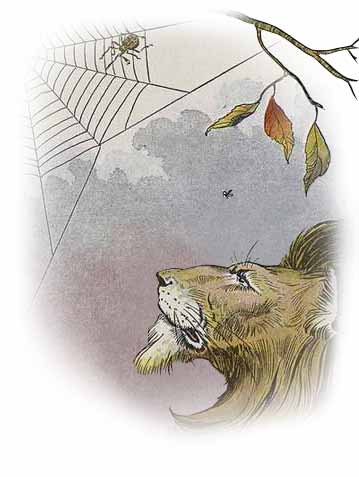
The Gnat buzzed away to tell the whole world about his victory, but instead he flew straight into a spider's web. And there, he who had defeated the King of beasts came to a miserable end, the prey of a little spider.
Moral: The least of our enemies is often the most to be feared. Pride over a success should not throw us off our guard.
狮子和蚊子 (中文翻译 拼音注音)
“滚开,你这烦人的小虫子!” 狮子生气地对一只在他脑袋周围嗡嗡作响的蚊子说道。然而蚊子对此完全无动于衷。
“你以为就因为你是万兽之王我就会害怕你吗?” 蚊子轻蔑地对狮子说道。
说罢,他飞到狮子头上,并在他的鼻子上狠狠地蜇了一下。生气极的狮子用力拍向蚊子,但蚊子没拍着,却打到自己。在蚊子一次又一次的挑衅下,狮子气急败坏地咆哮着。最终,筋疲力尽,并被自己的爪子和牙齿弄得伤痕累累的狮子放弃了这场战斗。
蚊子嗡嗡地飞走,准备向全世界宣布自己的胜,却一头扎进了蜘蛛网里。在这里,这只曾经打败过万兽之王的蚊子,成为了蜘蛛的猎物,悲惨地死去。


Relevant Fables 相关寓言故事
- 伊索寓言:The Lion and the Mouse 狮子和老鼠
- 伊索寓言:The Gnat and the Bull 蚊子和公牛
- 伊索寓言:The Lion and the Ass 狮子和驴
- 伊索寓言:The Ass the Fox and the Lion 驴,狐狸和狮子
- 伊索寓言:The Lion the Bear and the Fox 狮子、熊和狐狸
- 伊索寓言:The Wolf and the Lion 狼和狮子
- 伊索寓言:The Fox and the Lion 狐狸和狮子
- 伊索寓言:Three Bullocks and a lion 三头公牛和一只狮子
- 伊索寓言:The Old Lion and the Fox 年迈的狮子和狐狸
- 伊索寓言:The Man and the Lion 人和狮子
- 伊索寓言:The Old Lion 年迈的狮子
- 伊索寓言:The Shepherd and the Lion 牧羊人和狮子
About 关于
The Aesop Fables for Children 伊索寓言儿童故事全集 (图文英汉双语版) (this work), the english fables originally from The Aesop for Children: with Pictures by Milo Winter published by Rand, McNally & Co in 1919. Some of pictures come from Library of Congress. This work is considered to be in the public domain in the United States. The Aesop Fables for Children contains the text of selected fables, color pictures, video, and interactive animations, and will be enjoyed by readers of any age.
The Aesop Fables for Children are a collection of stories designed to teach moral lessons credited to Aesop, a Greek slave and story-teller thought to have lived between 620 and 560 BCE.
Aesop's fables are some of the most well known in the world and have been translated in multiple languages and become popular in dozens of cultures through the course of five centuries. They have been told and retold in a variety of media, from oral tradition to written storybooks to stage, film and animated cartoon versions—even in architecture. This page include translation to Simplified Chinese.
伊索寓言是一部世界上最早的寓言故事集,是世界文学史上流传最广的寓言故事之一。 本文包含伊索寓言故事英文原文和简体中文翻译(中英双语)。
