The Ass and the Lap Dog 驴和哈巴狗 (精美插图) 双语 拼音注音 伊索寓言
标签:伊索寓言 儿童故事集 中英对照翻译 双语故事 拼音注音
Last Update 最后更新: 2022-01-12
The Ass and the Lap Dog (English)
Total Words: 304
There was once an Ass whose Master also owned a Lap Dog. This Dog was a favorite and received many a pat and kind word from his Master, as well as choice bits from his plate. Every day the Dog would run to meet the Master, frisking playfully about and leaping up to lick his hands and face.
All this the Ass saw with much discontent. Though he was well fed, he had much work to do; besides, the Master hardly ever took any notice of him.
Now the jealous Ass got it into his silly head that all he had to do to win his Master's favor was to act like the Dog. So one day he left his stable and clattered eagerly into the house.
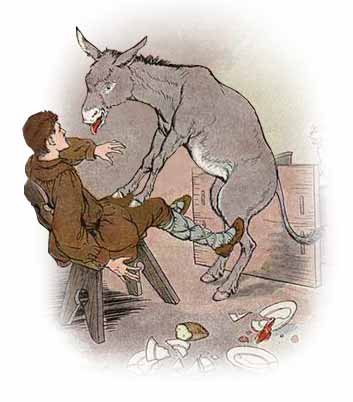
Finding his Master seated at the dinner table, he kicked up his heels and, with a loud bray, pranced giddily around the table, upsetting it as he did so. Then he planted his forefeet on his Master's knees and rolled out his tongue to lick the Master's face, as he had seen the Dog do. But his weight upset the chair, and Ass and man rolled over together in the pile of broken dishes from the table.
The Master was much alarmed at the strange behavior of the Ass, and calling for help, soon attracted the attention of the servants. When they saw the danger the Master was in from the clumsy beast, they set upon the Ass and drove him with kicks and blows back to the stable. There they left him to mourn the foolishness that had brought him nothing but a sound beating.
Moral: Behavior that is regarded as agreeable in one is very rude and impertinent in another. Do not try to gain favor by acting in a way that is contrary to your own nature and character.
驴和哈巴狗 (中文翻译 拼音注音)
从前,有这么一头驴,它的主人也还养了一只哈巴狗。而哈巴狗是主人的最爱,主人经常会轻轻地抚摸它,还常常夸它真乖,甚至还会给它很多好吃的。哈巴狗每天都会跑去它的主人身边,嬉闹玩耍,甚至跳起来舔主人的手和脸。
驴子看到这一切,极不满意。尽管它吃的很好,但是它有很多活儿要干;除此之外,主人几乎瞧都不瞧它一眼。
因此,被嫉妒心驱使的驴子,萌生了一个愚蠢的主意:它只要表现得像哈巴狗一样,就能够赢得主人得青睐了。于是,有一天它就离开了自己的窝棚,哒哒地跑进了屋里。
他发现主人正坐在餐桌旁,便翘起脚后跟,响亮地叫了一声,沿着桌子轻快地跳来跳去,却不曾像就这样竟会把桌子弄翻了。然后,他又像哈巴狗那样把前脚放在主人的膝盖上,伸出舌头舔主人的脸。但是它太重了,把主人从椅子上弄翻了,一起滚到了桌子上掉下来的一堆碎盘子里。
主人对驴子这怪异的行为惊诧极了,立马呼叫求助,仆人们很快地就闻讯赶来。当他们看到这头笨驴正置主人于危险之时,立马又踢又打地把它赶回了驴棚。驴子什么好处也没捞到,除了遭受一顿好打,就只有顾影自怜了。


Relevant Fables 相关寓言故事
- 伊索寓言:The Dog and His Reflection 狗和他的倒影
- 伊索寓言:The Dog the Cock and the Fox 狗、公鸡和狐狸
- 伊索寓言:The Ass and His Driver 驴和赶驴人
- 伊索寓言:The Lion and the Ass 狮子和驴
- 伊索寓言:The Ass Carrying the Image 驮着画像的驴
- 伊索寓言:The Ass and the Load of Salt 驴和盐
- 伊索寓言:The Ass the Fox and the Lion 驴,狐狸和狮子
- 伊索寓言:The Wolf and the Lean Dog 狼和瘦狗
- 伊索寓言:The Dog and His Master's Dinner 狗和他主人的晚餐
- 伊索寓言:The Wolf and the Ass 狼和驴
- 伊索寓言:The Dogs and the Fox 狗和狐狸
- 伊索寓言:The Dogs and the Hides 狗和牛皮
- 伊索寓言:The Dog in the Manger 牛槽中的狗
- 伊索寓言:The Ass and the Grasshoppers 驴和蚱蜢
- 伊索寓言:The Dog and the Oyster 狗和牡蛎
- 伊索寓言:The Wolf and the House Dog 狼和家犬
- 伊索寓言:The Mischievous Dog 淘气狗
- 伊索寓言:The Ass and His Shadow 驴和它的影子
About 关于
The Aesop Fables for Children 伊索寓言儿童故事全集 (图文英汉双语版) (this work), the english fables originally from The Aesop for Children: with Pictures by Milo Winter published by Rand, McNally & Co in 1919. Some of pictures come from Library of Congress. This work is considered to be in the public domain in the United States. The Aesop Fables for Children contains the text of selected fables, color pictures, video, and interactive animations, and will be enjoyed by readers of any age.
The Aesop Fables for Children are a collection of stories designed to teach moral lessons credited to Aesop, a Greek slave and story-teller thought to have lived between 620 and 560 BCE.
Aesop's fables are some of the most well known in the world and have been translated in multiple languages and become popular in dozens of cultures through the course of five centuries. They have been told and retold in a variety of media, from oral tradition to written storybooks to stage, film and animated cartoon versions—even in architecture. This page include translation to Simplified Chinese.
伊索寓言是一部世界上最早的寓言故事集,是世界文学史上流传最广的寓言故事之一。 本文包含伊索寓言故事英文原文和简体中文翻译(中英双语)。
