The Wolf and the Ass 狼和驴 (精美插图) 双语 拼音注音 伊索寓言
标签:伊索寓言 儿童故事集 中英对照翻译 双语故事 拼音注音
Last Update 最后更新: 2022-01-12
The Wolf and the Ass (English)
Total Words: 196
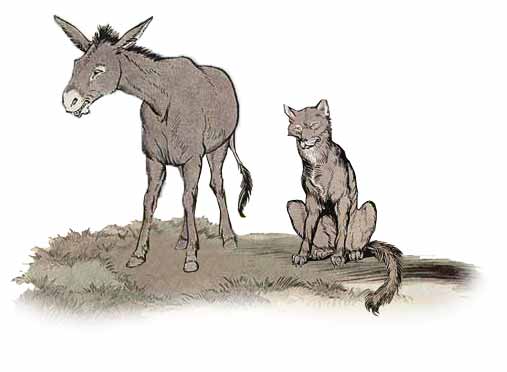
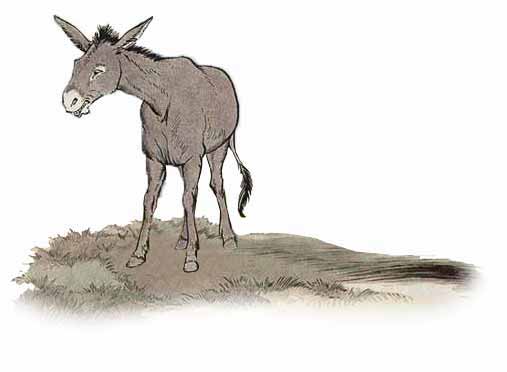
An Ass was feeding in a pasture near a wood when he saw a Wolf lurking in the shadows along the hedge. He easily guessed what the Wolf had in mind, and thought of a plan to save himself. So he pretended he was lame, and began to hobble painfully.
When the Wolf came up, he asked the Ass what had made him lame, and the Ass replied that he had stepped on a sharp thorn.
"Please pull it out," he pleaded, groaning as if in pain. "If you do not, it might stick in your throat when you eat me."
The Wolf saw the wisdom of the advice, for he wanted to enjoy his meal without any danger of choking. So the Ass lifted up his foot and the Wolf began to search very closely and carefully for the thorn.
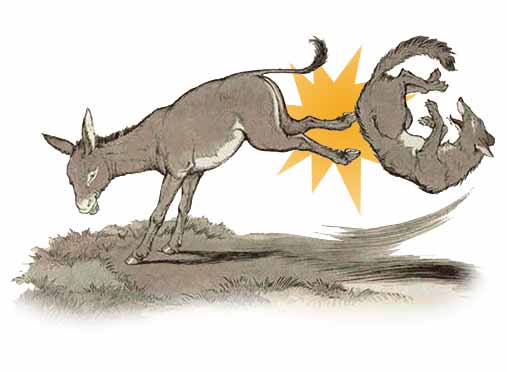
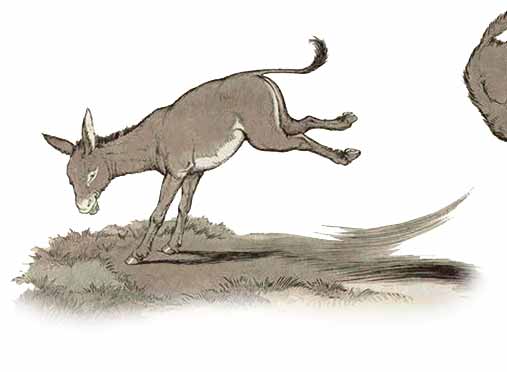
Just then the Ass kicked out with all his might, tumbling the Wolf a dozen paces away. And while the Wolf was getting very slowly and painfully to his feet, the Ass galloped away in safety.
"Serves me right," growled the Wolf as he crept into the bushes. "I'm a butcher by trade, not a doctor."
Moral: Stick to your trade.
狼和驴 (中文翻译 拼音注音)
一头驴正在林子附近的一片草场上觅食的时候,看见了一头狼潜伏在阴暗的灌木丛中。轻而易举他就猜到了那头狼在打什么主意,然后就想出了一个自保的办法。他假装自己跛脚了,并开始痛苦地蹒跚而行。
当狼出现的时候,他问驴是什么让他瘸的,驴回答说他踩到了一根锋利的刺。
“请把它拔出来,”他哀求著,呻吟著,好像很疼。“ 如果你不帮忙,当你吃我的时候,它可能会卡在你的喉咙里。”
狼看出了这个建议的明智之处,因为它想尽情地享用它的美餐,而不会有被噎住的危险。于是驴抬起脚来,狼开始仔细仔细地寻找刺。
就在这时,驴用尽力气踢了一脚,把狼踢到十几步远的地方。当狼慢慢地、痛苦地站起来的时候,驴子安全地跑开了。
“我罪有应得。” 狼咆哮着钻进了灌木丛。“我是屠夫,不是医生。”


Relevant Fables 相关寓言故事
- 伊索寓言:The Wolf and the Crane 狼和鹤
- 伊索寓言:The Wolf in Sheep's Clothing 披着羊皮的狼
- 伊索寓言:The Mother and the Wolf 母亲和狼
- 伊索寓言:The Wolf and the Kid 狼和小羊
- 伊索寓言:The Kid and the Wolf 小羊和狼
- 伊索寓言:The Ass and His Driver 驴和赶驴人
- 伊索寓言:The Shepherd Boy and the Wolf 狼来了
- 伊索寓言:The Lion and the Ass 狮子和驴
- 伊索寓言:The Wolf and His Shadow 狼和他的影子
- 伊索寓言:The Ass Carrying the Image 驮着画像的驴
- 伊索寓言:The Ass and the Load of Salt 驴和盐
- 伊索寓言:The Ass the Fox and the Lion 驴,狐狸和狮子
- 伊索寓言:The Wolf and the Lamb 狼和小羊
- 伊索寓言:The Wolf and the Sheep 狼和羊
- 伊索寓言:The Wolf and the Lion 狼和狮子
- 伊索寓言:The Wolf and the Lean Dog 狼和瘦狗
- 伊索寓言:The Wolf and the Goat 狼和山羊
- 伊索寓言:The Ass and the Grasshoppers 驴和蚱蜢
- 伊索寓言:The Wolf and the Shepherd 狼和牧羊人
- 伊索寓言:The Ass and the Lap Dog 驴和哈巴狗
- 伊索寓言:The Wolf and the Shepherd 狼和牧羊人
- 伊索寓言:The Wolf and the House Dog 狼和家犬
- 伊索寓言:The Stag the Sheep and the Wolf 鹿、羊和狼
- 伊索寓言:The Ass and His Shadow 驴和它的影子
About 关于
The Aesop Fables for Children 伊索寓言儿童故事全集 (图文英汉双语版) (this work), the english fables originally from The Aesop for Children: with Pictures by Milo Winter published by Rand, McNally & Co in 1919. Some of pictures come from Library of Congress. This work is considered to be in the public domain in the United States. The Aesop Fables for Children contains the text of selected fables, color pictures, video, and interactive animations, and will be enjoyed by readers of any age.
The Aesop Fables for Children are a collection of stories designed to teach moral lessons credited to Aesop, a Greek slave and story-teller thought to have lived between 620 and 560 BCE.
Aesop's fables are some of the most well known in the world and have been translated in multiple languages and become popular in dozens of cultures through the course of five centuries. They have been told and retold in a variety of media, from oral tradition to written storybooks to stage, film and animated cartoon versions—even in architecture. This page include translation to Simplified Chinese.
伊索寓言是一部世界上最早的寓言故事集,是世界文学史上流传最广的寓言故事之一。 本文包含伊索寓言故事英文原文和简体中文翻译(中英双语)。
