The Wolf and the House Dog 狼和家犬 (精美插图) 双语 拼音注音 伊索寓言
标签:伊索寓言 儿童故事集 中英对照翻译 双语故事 拼音注音
Last Update 最后更新: 2022-01-12
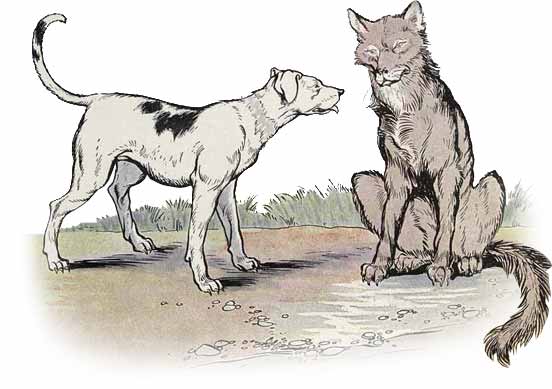
The Wolf and the House Dog (English)
Total Words: 326
There was once a Wolf who got very little to eat because the Dogs of the village were so wide awake and watchful. He was really nothing but skin and bones, and it made him very downhearted to think of it.
One night this Wolf happened to fall in with a fine fat House Dog who had wandered a little too far from home. The Wolf would gladly have eaten him then and there, but the House Dog looked strong enough to leave his marks should he try it. So the Wolf spoke very humbly to the Dog, complimenting him on his fine appearance.
"You can be as well-fed as I am if you want to," replied the Dog. "Leave the woods; there you live miserably. Why, you have to fight hard for every bite you get. Follow my example and you will get along beautifully."
"What must I do?" asked the Wolf.
"Hardly anything," answered the House Dog. "Chase people who carry canes, bark at beggars, and fawn on the people of the house. In return you will get tidbits of every kind, chicken bones, choice bits of meat, sugar, cake, and much more beside, not to speak of kind words and caresses."
The Wolf had such a beautiful vision of his coming happiness that he almost wept. But just then he noticed that the hair on the Dog's neck was worn and the skin was chafed.
"What is that on your neck?"
"Nothing at all," replied the Dog.
"What! nothing!"
"Oh, just a trifle!"
"But please tell me."
"Perhaps you see the mark of the collar to which my chain is fastened."
"What! A chain!" cried the Wolf. "Don't you go wherever you please?"
"Not always! But what's the difference?" replied the Dog.
"All the difference in the world! I don't care a rap for your feasts and I wouldn't take all the tender young lambs in the world at that price." And away ran the Wolf to the woods.
Moral: There is nothing worth so much as liberty.
狼和家犬 (中文翻译 拼音注音)
从前,有一只狼几乎找不到吃的,因为村子里的狗非常机警。他可真是饿得皮包骨头了,想起这事就令他心情沮丧。
某天晚上,这只狼碰巧遇到了一只又肥又壮离家较远的家犬。狼就很想当场吃掉它,不过这只家犬看起来很强壮,要是他胆敢一试的话,免不了要留下痕迹。于是,他就十分谦卑地和狗攀谈,并夸赞它那英俊潇洒的身材。
“如果你愿意的话,也会得到很好的食物,”狗儿答道。“离开森林吧;你这样的生活太过凄苦。嚄,每一口食物你都不得不努力争斗。学学我,你会过的很滋润。”
“我需要怎么做呢?”狼问道。
“几乎不用做什么,”狗儿说道。“把手持木棍的人和流浪汉赶走,并讨好主人。这样你就会得到各种各样的珍馐美味,鸡骨头、精选的肉块、糖、蛋糕等等,更不用说亲切的话语和爱抚了。”
狼对自己即将到来的幸福有着如此美好的憧憬,这令他他几乎要哭了。但就在这时,他注意到狗脖子上的毛已经磨破了,皮肤也擦伤了。
“你的脖子上是什么?”
“没什么啊,”狗儿答道。
“啥!这还没什么?”
“噢,区区小事!”
“不过,还请你如实相告。”
“也许你看到了用链子拴在我脖子上的项圈的记号。”
“什么!一条链子!”狼叫道。“不能你想去哪儿就去哪儿吗?”
“也不总是这样!但是有什么区别呢?”狗回答说。
“真是天壤之别!我一点也不在乎你的佳肴,我也不愿意以这个价钱把世界上所有的嫩羊羔都买下来。” 狼接着就跑到树林里去了。


Relevant Fables 相关寓言故事
- 伊索寓言:The Wolf and the Crane 狼和鹤
- 伊索寓言:The Wolf in Sheep's Clothing 披着羊皮的狼
- 伊索寓言:The Mother and the Wolf 母亲和狼
- 伊索寓言:The Dog and His Reflection 狗和他的倒影
- 伊索寓言:The Wolf and the Kid 狼和小羊
- 伊索寓言:The Dog the Cock and the Fox 狗、公鸡和狐狸
- 伊索寓言:The Kid and the Wolf 小羊和狼
- 伊索寓言:The Shepherd Boy and the Wolf 狼来了
- 伊索寓言:The Wolf and His Shadow 狼和他的影子
- 伊索寓言:The Wolf and the Lamb 狼和小羊
- 伊索寓言:The Wolf and the Sheep 狼和羊
- 伊索寓言:The Wolf and the Lion 狼和狮子
- 伊索寓言:The Wolf and the Lean Dog 狼和瘦狗
- 伊索寓言:The Dog and His Master's Dinner 狗和他主人的晚餐
- 伊索寓言:The Wolf and the Ass 狼和驴
- 伊索寓言:The Dogs and the Fox 狗和狐狸
- 伊索寓言:The Dogs and the Hides 狗和牛皮
- 伊索寓言:The Dog in the Manger 牛槽中的狗
- 伊索寓言:The Wolf and the Goat 狼和山羊
- 伊索寓言:The Wolf and the Shepherd 狼和牧羊人
- 伊索寓言:The Dog and the Oyster 狗和牡蛎
- 伊索寓言:The Ass and the Lap Dog 驴和哈巴狗
- 伊索寓言:The Wolf and the Shepherd 狼和牧羊人
- 伊索寓言:The Mischievous Dog 淘气狗
- 伊索寓言:The Stag the Sheep and the Wolf 鹿、羊和狼
About 关于
The Aesop Fables for Children 伊索寓言儿童故事全集 (图文英汉双语版) (this work), the english fables originally from The Aesop for Children: with Pictures by Milo Winter published by Rand, McNally & Co in 1919. Some of pictures come from Library of Congress. This work is considered to be in the public domain in the United States. The Aesop Fables for Children contains the text of selected fables, color pictures, video, and interactive animations, and will be enjoyed by readers of any age.
The Aesop Fables for Children are a collection of stories designed to teach moral lessons credited to Aesop, a Greek slave and story-teller thought to have lived between 620 and 560 BCE.
Aesop's fables are some of the most well known in the world and have been translated in multiple languages and become popular in dozens of cultures through the course of five centuries. They have been told and retold in a variety of media, from oral tradition to written storybooks to stage, film and animated cartoon versions—even in architecture. This page include translation to Simplified Chinese.
伊索寓言是一部世界上最早的寓言故事集,是世界文学史上流传最广的寓言故事之一。 本文包含伊索寓言故事英文原文和简体中文翻译(中英双语)。
