The Fox Without a Tail 断了尾巴的狐狸 (精美插图) 双语 拼音注音 伊索寓言
标签:伊索寓言 儿童故事集 中英对照翻译 双语故事 拼音注音
Last Update 最后更新: 2022-01-12
The Fox Without a Tail (English)
Total Words: 299
A Fox that had been caught in a trap, succeeded at last, after much painful tugging, in getting away. But he had to leave his beautiful bushy tail behind him.
For a long time he kept away from the other Foxes, for he knew well enough that they would all make fun of him and crack jokes and laugh behind his back. But it was hard for him to live alone, and at last he thought of a plan that would perhaps help him out of his trouble.
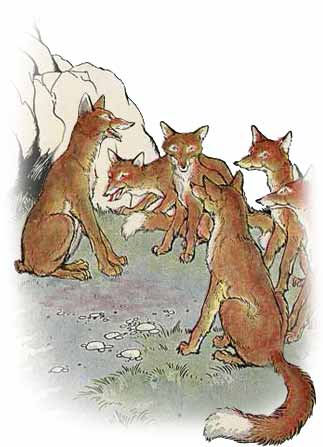
He called a meeting of all the Foxes, saying that he had something of great importance to tell the tribe.
When they were all gathered together, the Fox Without a Tail got up and made a long speech about those Foxes who had come to harm because of their tails.
This one had been caught by hounds when his tail had become entangled in the hedge. That one had not been able to run fast enough because of the weight of his brush. Besides, it was well known, he said, that men hunt Foxes simply for their tails, which they cut off as prizes of the hunt. With such proof of the danger and uselessness of having a tail, said Master Fox, he would advise every Fox to cut it off, if he valued life and safety.
When he had finished talking, an old Fox arose, and said, smiling:
"Master Fox, kindly turn around for a moment, and you shall have your answer."
When the poor Fox Without a Tail turned around, there arose such a storm of jeers and hooting, that he saw how useless it was to try any longer to persuade the Foxes to part with their tails.
Moral: Do not listen to the advice of him who seeks to lower you to his own level.
断了尾巴的狐狸 (中文翻译 拼音注音)
有一只被陷阱困住的狐狸,经过非常绝望的挣扎后,最终成功逃脱了。但是,却没能保住他那条漂亮的毛尾巴。
很长一段时间,他一直离他的同伴远远的,因为他很清楚,那些同伴只会取笑他、拿他开玩笑,甚至还在背后议论他。但是,他又不能离开同伴而独活,终于,他想出了一个主意,也许能够帮助他走出困境。
他把所有狐狸召集起来开了一场会,声称自己有非常重要的事情要告诉大家。
当所有狐狸都到齐的时候,断尾狐站起来发表了一段长长的演说,主要意思是说狐狸们之所以会受到伤害,就在于他们的尾巴。
这只狐狸的尾巴被陷阱困住后就被猎狗捉住,那只狐狸因为尾巴太重而不能迅速逃脱。除此之外,众所周知,人类猎杀狐狸仅仅是为了他们的尾巴,砍下来的尾巴就被人类作为奖赏。这就很明显了,尾巴这种带来危险而又没有用处的东西,断尾狐大师说道,他建议如果狐狸们珍惜生命、顾及安危的话,每只狐狸都把尾巴砍掉。
他说完后,一只年老的狐狸站起身笑着说:“狐狸大师,请您转下身,你很快就会得到答复。”
于是,当这只可怜的断尾狐转过身去,会场又是阵阵哄堂大笑,现在他明白了,再继续劝说大家都把尾巴断掉只能是无用之功。


Relevant Fables 相关寓言故事
- 伊索寓言:The Fox and the Grapes 狐狸和葡萄
- 伊索寓言:The Wild Boar and the Fox 野猪和狐狸
- 伊索寓言:The Fox and the Stork 狐狸和鹤
- 伊索寓言:The Cock and the Fox 公鸡和狐狸
- 伊索寓言:The Fox and the Goat 狐狸和山羊
- 伊索寓言:The Fox and the Leopard 狐狸和豹子
- 伊索寓言:The Fox and the Crow 狐狸和乌鸦
- 伊索寓言:The Dog the Cock and the Fox 狗、公鸡和狐狸
- 伊索寓言:The Ass the Fox and the Lion 驴,狐狸和狮子
- 伊索寓言:The Lion the Bear and the Fox 狮子、熊和狐狸
- 伊索寓言:The Fox and the Lion 狐狸和狮子
- 伊索寓言:The Dogs and the Fox 狗和狐狸
- 伊索寓言:The Fox and the Crab 狐狸和螃蟹
- 伊索寓言:The Old Lion and the Fox 年迈的狮子和狐狸
- 伊索寓言:The Fox and the Hedgehog 狐狸与刺猬
- 伊索寓言:The Cat and the Fox 猫和狐狸
- 伊索寓言:The Fox and the Pheasants 狐狸和山鸡
- 伊索寓言:The Fox and the Monkey 狐狸和猴子
About 关于
The Aesop Fables for Children 伊索寓言儿童故事全集 (图文英汉双语版) (this work), the english fables originally from The Aesop for Children: with Pictures by Milo Winter published by Rand, McNally & Co in 1919. Some of pictures come from Library of Congress. This work is considered to be in the public domain in the United States. The Aesop Fables for Children contains the text of selected fables, color pictures, video, and interactive animations, and will be enjoyed by readers of any age.
The Aesop Fables for Children are a collection of stories designed to teach moral lessons credited to Aesop, a Greek slave and story-teller thought to have lived between 620 and 560 BCE.
Aesop's fables are some of the most well known in the world and have been translated in multiple languages and become popular in dozens of cultures through the course of five centuries. They have been told and retold in a variety of media, from oral tradition to written storybooks to stage, film and animated cartoon versions—even in architecture. This page include translation to Simplified Chinese.
伊索寓言是一部世界上最早的寓言故事集,是世界文学史上流传最广的寓言故事之一。 本文包含伊索寓言故事英文原文和简体中文翻译(中英双语)。
