The Wolf and the Lamb 狼和小羊 (精美插图) 双语 拼音注音 伊索寓言
标签:伊索寓言 儿童故事集 中英对照翻译 双语故事 拼音注音
Last Update 最后更新: 2022-01-12
The Wolf and the Lamb (English)
Total Words: 247
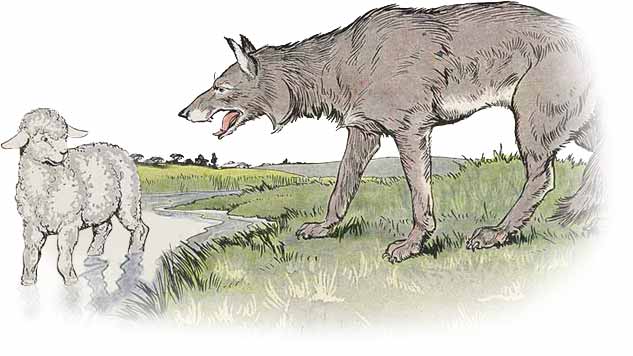
A stray Lamb stood drinking early one morning on the bank of a woodland stream. That very same morning a hungry Wolf came by farther up the stream, hunting for something to eat. He soon got his eyes on the Lamb. As a rule Mr. Wolf snapped up such delicious morsels without making any bones about it, but this Lamb looked so very helpless and innocent that the Wolf felt he ought to have some kind of an excuse for taking its life.
"How dare you paddle around in my stream and stir up all the mud!" he shouted fiercely. "You deserve to be punished severely for your rashness!"
"But, your highness," replied the trembling Lamb, "do not be angry! I cannot possibly muddy the water you are drinking up there. Remember, you are upstream and I am downstream."
"You do muddy it!" retorted the Wolf savagely. "And besides, I have heard that you told lies about me last year!" "How could I have done so?" pleaded the Lamb. "I wasn't born until this year."
"If it wasn't you, it was your brother!"
"I have no brothers."
"Well, then," snarled the Wolf, "It was someone in your family anyway. But no matter who it was, I do not intend to be talked out of my breakfast."
And without more words the Wolf seized the poor Lamb and carried her off to the forest.
Moral: The tyrant can always find an excuse for his tyranny. The unjust will not listen to the reasoning of the innocent.
狼和小羊 (中文翻译 拼音注音)
一天早上,一只离群的小羊在林边小溪喝水。同时,一只狼来到小溪的不远处觅食。不久,他就盯上了小羊。通常,狼先生都会不假思索地把他的猎物一口吞下,但这只小羊羔看起来是那么地无助和无辜,使得狼感到自己需要找点正当理由才好下口结束她的生命。
“你胆子不小啊,居然在我的河里走来走去,把水都搅浑了!”他恶狠狠地咆哮道。“有必要好好地教训一下你这个莽撞的家伙。”
“但是,殿下,” 颤抖的小羊回答道,“请息怒!我可没有搅浑您要喝的水啊。因为您处在上游,而我是在下游。”
“你就搅浑我的水了!” 狼粗鲁地回道。“另外,我听说你去年说了污蔑我的话!”
“这怎么可能呢?” 小羊哀声道。“我去年还没出生呢。”
“如果不是你,那就是你的哥哥!”
“我没有哥哥。”
“那好,”狼怒吼道,“反正是你家里某个人说的。但不管是谁,我都不会让我的早餐跑了。”
然后狼二话不说就抓住了可怜的小羊,并把她叼回森林里。


Relevant Fables 相关寓言故事
- 伊索寓言:The Wolf and the Crane 狼和鹤
- 伊索寓言:The Wolf in Sheep's Clothing 披着羊皮的狼
- 伊索寓言:The Mother and the Wolf 母亲和狼
- 伊索寓言:The Wolf and the Kid 狼和小羊
- 伊索寓言:The Kid and the Wolf 小羊和狼
- 伊索寓言:The Shepherd Boy and the Wolf 狼来了
- 伊索寓言:The Sheep and the Pig 绵羊和猪
- 伊索寓言:The Wolf and His Shadow 狼和他的影子
- 伊索寓言:The Wolf and the Sheep 狼和羊
- 伊索寓言:The Wolf and the Lion 狼和狮子
- 伊索寓言:The Wolf and the Lean Dog 狼和瘦狗
- 伊索寓言:The Wolf and the Ass 狼和驴
- 伊索寓言:The Wolf and the Goat 狼和山羊
- 伊索寓言:The Wolf and the Shepherd 狼和牧羊人
- 伊索寓言:The Wolf and the Shepherd 狼和牧羊人
- 伊索寓言:The Wolf and the House Dog 狼和家犬
- 伊索寓言:The Stag the Sheep and the Wolf 鹿、羊和狼
About 关于
The Aesop Fables for Children 伊索寓言儿童故事全集 (图文英汉双语版) (this work), the english fables originally from The Aesop for Children: with Pictures by Milo Winter published by Rand, McNally & Co in 1919. Some of pictures come from Library of Congress. This work is considered to be in the public domain in the United States. The Aesop Fables for Children contains the text of selected fables, color pictures, video, and interactive animations, and will be enjoyed by readers of any age.
The Aesop Fables for Children are a collection of stories designed to teach moral lessons credited to Aesop, a Greek slave and story-teller thought to have lived between 620 and 560 BCE.
Aesop's fables are some of the most well known in the world and have been translated in multiple languages and become popular in dozens of cultures through the course of five centuries. They have been told and retold in a variety of media, from oral tradition to written storybooks to stage, film and animated cartoon versions—even in architecture. This page include translation to Simplified Chinese.
伊索寓言是一部世界上最早的寓言故事集,是世界文学史上流传最广的寓言故事之一。 本文包含伊索寓言故事英文原文和简体中文翻译(中英双语)。
